
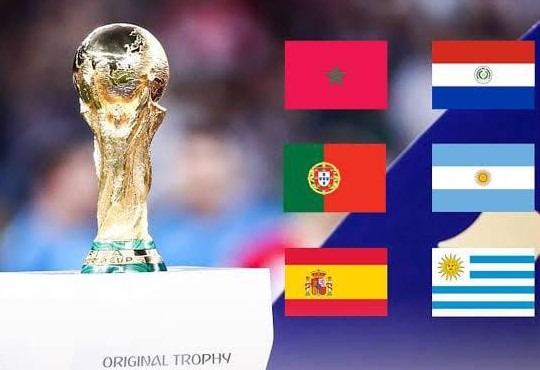

The 2030 FIFA World Cup will make football history by becoming the first edition of the tournament to be played across three continents. The landmark event will bring together Europe, Africa, and South America as six countries prepare to host matches in a celebration of the competition’s 100-year anniversary.
2030 FIFA World Cup
The tournament will officially be hosted by Morocco, Spain, and Portugal, while three opening matches will take place in Uruguay, Argentina, and Paraguay as part of FIFA’s centenary celebration. This unique format means the 2030 FIFA World Cup will connect three continents and highlight the global nature of football like never before.
The decision carries special historical significance because the first-ever FIFA World Cup was held in Uruguay in 1930. To mark 100 years since that historic tournament, FIFA approved plans for the opening celebrations to return to South America, where the competition began.
Uruguay’s Estadio Centenario in Montevideo holds a special place in World Cup history. It hosted the first final in 1930, where Uruguay defeated Argentina to become the first world champions. A century later, the tournament will return to its roots before moving across the Atlantic for the main competition.
Also Read: 2026 World Cup Most Impressive and Most Disappointing Nations
Following the opening celebrations in South America, the majority of the 2030 FIFA World Cup matches will be played in Morocco, Spain, and Portugal. The three nations submitted a joint bid focused on combining modern stadiums, strong football traditions, and improved travel connections between host cities.
Spain will bring some of Europe’s most famous football venues to the tournament, while Portugal will use its experience from hosting Euro 2004. Morocco, meanwhile, will become the second African country to host the men’s FIFA World Cup after South Africa hosted the competition in 2010.
The 2030 FIFA World Cup will also represent another major expansion of football’s biggest tournament. Following the introduction of the 48-team format at the 2026 World Cup, the 2030 edition will continue with an increased number of participating nations, creating more matches and opportunities for countries from around the world.
However, the three-continent format has also created debate among football supporters. Some fans have raised concerns about the environmental impact of teams and supporters travelling between continents during the opening phase of the tournament. Others believe the format provides a unique opportunity to celebrate football’s history and bring different cultures together.
FIFA has defended the decision by highlighting the symbolic importance of returning to Uruguay while creating a global celebration of the sport. The governing body believes the tournament will demonstrate football’s ability to unite nations across geographical and cultural boundaries.
The 2030 FIFA World Cup will also be another opportunity for host nations to showcase their football culture. Spain, Portugal, Morocco, Uruguay, Argentina, and Paraguay all have deep football traditions and passionate supporters who will play a major role in creating the tournament atmosphere.
Another major talking point surrounding the 2030 FIFA World Cup is the scale of preparation required across the six host nations. From stadium upgrades and transport networks to accommodation and security planning, organizers will face the challenge of delivering a tournament that spans thousands of kilometres. The experience gained from previous multi-country tournaments, including the 2026 World Cup hosted by the United States, Canada, and Mexico, will provide valuable lessons as FIFA prepares for an even more geographically diverse event. Despite the logistical challenges, supporters are expected to embrace the opportunity to experience different football cultures, landscapes, and traditions during one historic tournament.
For players, the tournament will provide another chance to write their names into football history. The competition could feature the next generation of global stars while also celebrating legendary players who have shaped the sport over the previous century.
As football approaches its second century of World Cup competition, the 2030 FIFA World Cup will stand as one of the most ambitious tournaments ever organised. By bringing matches to three continents and reconnecting with the origins of the competition, FIFA aims to create a celebration that honours the past while looking toward the future.
When the tournament begins, it will not only crown a new world champion but also commemorate 100 years of the world’s greatest football event.