
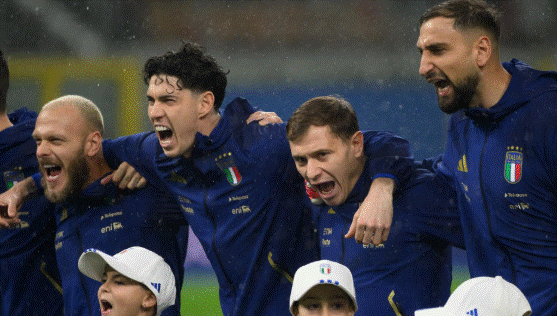

Italian football is facing one of its most defining modern moments. Once a symbol of tactical dominance and global prestige, Italian football now finds itself under growing pressure both domestically and internationally.
Table of Contents
ToggleItalian Football in Crisis
The possibility that Italy national football team could miss a third consecutive FIFA World Cup has reignited serious debate about the direction of Italian football. After failing to qualify for the 2018 and 2022 tournaments, another absence would represent an unprecedented collapse for a four-time world champion.
This is no longer a temporary dip. Italian football is confronting structural warning signs.
World Cup Qualification Anxiety Returns
For decades, Italian football built its identity on resilience, defensive mastery, and tournament mentality. Missing two consecutive World Cups was already historic. The thought of a third has shifted from unthinkable to plausible.
Recent qualifying performances have exposed inconsistency. Defensive organization, once the foundation of Italian football, has shown vulnerability. Midfield control has lacked authority in key fixtures. Goal scoring efficiency has fluctuated when it matters most.
While the UEFA Euro 2020 triumph briefly revived belief, it now appears more like an exception than proof of sustained progress. Italian football cannot rely on isolated tournament success to mask deeper systemic issues.
European Representation Tells a Story
The current state of Italian football is also reflected in continental competition. With Atalanta BC standing as the only remaining Italian representative in the UEFA Champions League, questions about overall league competitiveness are unavoidable.
Traditional heavyweights such as Juventus FC, AC Milan, and Inter Milan have struggled to maintain consistent European impact in recent seasons.

Atalanta’s presence is admirable. Their recruitment strategy, tactical clarity, and adaptability reflect forward thinking within Italian football. However, their solitary status in Europe also highlights the diminishing collective depth of Serie A on the continental stage.
Also Read: Is Mexico World Cup Safety at Risk After the Latest Cartel
Financial Disparity and Structural Lag
One of the biggest challenges confronting Italian football is economic. The dominance of the Premier League has reshaped European competition. Broadcast revenue, commercial growth, and global brand expansion give English clubs structural advantages that Italian clubs find difficult to match.
Stadium ownership complexities, aging infrastructure, and slower commercial modernization have limited revenue potential in Italy. This financial gap directly affects squad investment, youth retention, and long term planning.
Italy football must confront the reality that modern competitiveness demands economic strength alongside tactical intelligence.
Tactical Tradition vs Modern Evolution
Italy football’s historic identity remains rooted in defensive structure and game management. While those qualities are still valuable, modern football emphasizes pressing intensity, pace, and physical output.
When Italian clubs compete in Europe, the tempo gap often becomes visible. Domestic competition does not always replicate the athletic demands seen in England or Germany. That difference filters upward to the national team.
Italian football continues to produce technically gifted players, but development systems must align with the pace and physicality of the contemporary game.
Governance and Accountability
If Italian football were to miss another World Cup, scrutiny would intensify across federation leadership and domestic structures. Are youth academies adequately supported? Is financial reform progressing fast enough? Are clubs being incentivized to modernize infrastructure?
Rebuildin football in italy requires more than short term fixes. It requires coordinated reform between clubs, league officials, and the national federation.
History shows that Italian football has recovered from crises before. Yet this moment feels different. Global competition has never been fiercer, and patience among supporters is thinning.
Italy football stands at a crossroads. Whether it responds decisively or drifts further from its historical stature will define its relevance in the next decade.
The warning signs are clear. The question now is whether Italian football will act before the consequences become irreversible.