

There has been a setback for the United States Democratic president, Joe Biden who has championed the need for solutions to America’s Police Problems
Biden called Floyd’s killing a “stain on America’s soul” and, in a statement, hoped to eventually pass a comprehensive police reform bill and said he would consider developing new ones. executive measures in this regard.
Biden said, “Unfortunately, Senate Republicans have refused to enact modest reforms that even the previous president supported while refusing to take action on important issues that many law enforcement officials wanted to address. ”
Among the issues discussed by lawmakers were certain changes to “qualified immunity,” which protects police officers from certain court cases in which they are accused of using excessive force, and prohibits the type of strangulation and other restrictions on those arrested which also resulted in deaths.

The increasing frequency of such cases has led to a growing chorus of criticism from lawyers, legal scholars, civil rights groups, politicians, and even judges who have called immunity unfair. . But this broad coalition says the doctrine has become a near-infallible tool for leaving police brutality unpunished and denying the constitutional rights of victims.
Research supports arguments that the Supreme Court has built qualified immunity into an often insurmountable police defense by intervening in cases on behalf of the police.
The Supreme Court has indicated that it is aware of growing criticism of its treatment of qualified immunity. The judges are due to discuss in private as early as May 15 the 11 cases they could hear later this year, after multiple appeals backed by critics of the doctrine.
Speaking to reporters, Booker said, “It was clear at this bargaining table at that time that we weren’t making any progress” after nine months of meetings. He added: “In fact, recent article exchanges have shown me that we are indeed moving away from that.”
Republican Senator Tim Scott, in a statement, accused Democrats of “reverting to a partisan approach to scoring political points.” Scott said the two sides had reached agreements banning chokeholds, limiting the transfer of military equipment to police departments, and increasing mental health resources.
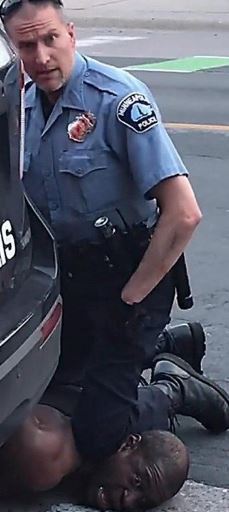
In April, Minneapolis police officer Derek Chauvin was convicted of the May 2020 murder of George Floyd. The death sparked protests across the United States and renewed police reform efforts in Washington to eradicate systemic racism.
Democrats have proposed legislation aimed at eliminating inequality and reducing deaths in custody, including measures that would require police to wear body cameras, ban chokeholds and make it easier to chase officers.
Here is an overview of some of these proposed solutions and other possible avenues for reforming policing in the United States.
1. Rewrite the “use of force” policy
Most police departments have a “use of force” policy that dictates how and when officers can use force. These policies vary widely from jurisdiction to jurisdiction. For example, the type of “neck brace” or chokehold that Officer Derek Chauvin used on George Floyd has been banned in New York since 1993.
In the wake of high-profile police killings, many departments are being forced to review and rewrite their use-of-force policies through federal consent decrees. The City of Baltimore revised its policy in 2019 as part of its consent decree with the US Department of Justice following the death of Freddie Gray. The new version requires officers to report the use of force incidents and requires them to intervene if they see another officer using force inappropriately. After Floyd’s death, the Minneapolis City Council forced police to ban the bottlenecks and asking officers to intervene if their colleagues use inappropriate force.
Proponents acknowledge that simply rewriting these policies would not be effective in preventing deaths like Floyd’s and that violence continues to be used disproportionately against communities of color. A New York Times analysis found that Minneapolis police are seven times more likely to use violence against black residents than against white residents.
Also read: 4 United States Police Officers Arrested, Charged For Shooting Breonna Taylor
2. Don’t pay the police
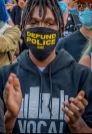
Protesters believe cities and states are spending too much money on their police forces without adequate funding for education, mental health, housing, and other community-based social services. There is a growing demand for political leaders to “definance” the police – this usually means cutting funding, but not completely.
These calls were followed up by the mayor of Los Angeles, who saved $ 150 million on a proposed budget increase for his city police force. New York City Mayor Bill de Blasio has also pledged to funnel money from the NYPD into social services, though he hasn’t given a figure.
New York Governor Cuomo: ‘This must be a fundamental rethinking of police tactics
In Minneapolis, a group called the Black Visions Collective is calling on the city council to pledge not to increase the police budget and to spend $ 45 million of the current police budget to support the city’s treasury in the wake of the coronavirus pandemic.
“Now is the time to invest in a secure and liberated future for our city,” the group wrote. “We cannot afford to continue funding MPD attacks on black lives.”
3. Dismantle the police
On Sunday, in front of a crowd of protesters, a veto-proof majority of the Minneapolis City Council signed a pledge to “begin the process of removing the Minneapolis Police Department.” They promised to create a “transformative new model for cultivating safety”. Earlier in the week, two board members used the word “shrink” to describe their plans for the department, as did Minnesota Rep. Ilhan Omar.
The statement did not say whether the council was simply promising to redesign the department, or whether it was heeding calls from some protesters to “abolish the police”, which appears to be the more drastic course of action. The council chairman said he can envision a scenario where the department is placed under receivership and a team of doctors and health professionals answer calls from the emergency health services instead of the police.
A group called MPD 150 calls for a “police-free future” in Minneapolis, in which mental health professionals, social workers, religious leaders, and other community advocates do police work.
There is a historical precedent for a large-scale dismantling of a department. In 2012, the Camden, New Jersey Police Department was completely disbanded and all of its officers lost their jobs. It certainly wasn’t an abolition, though: a new provincial police force was formed in its place and about 100 former Camden agents applied and resumed work. The move brought more police to the streets of Camden. The new department had a very strict violence policy and made it easier for the city to fire rogue officers.
The department has since reported a sharp decline in the number of murders and the use of violence.
4. Demilitarize
Since the 1990s, the military has transferred over $ 5 billion worth of equipment from sleeping bags to ammunition and armored vehicles to local law enforcement agencies through a special acquisition program with the US Department of Defense. United. As a result, many proponents of police reform argue that the police today function more like indigenous soldiers, using techniques and equipment designed for combat, than like community peacekeepers trying to ensure the safety of people, and that this approach costs lives.
President Barack Obama imposed limits on police use of the program in 2015, but most of those limits were lifted by the Trump administration a few years later.
Not only have police bought more guns over the past two decades, but many are also learning military tactics. This so-called “training of warriors” often weaves a narrative in which cops are heroes who must fend off danger at every turn and learn to protect themselves at all costs – even if it means killing civilians.
Critics say it teaches cops to be scared and shoot first, then think. In 2019, Minneapolis Mayor Jacob Frey banned cops from attending “warrior-style” workouts, even if they were on their own time with their own money. But the local police union called the ban “illegal” and continued to offer the training.
Research shows that militarization leads to police violence. In 2017, a study published in Research and Politics found that the more military weapons they have, the more likely they are to be used by police.
 5. Pursue the Police
Citizens who attempt to sue police in civil courts for excessive use of force are often expelled under a legal doctrine known as “qualified immunity.” It was designed by the Supreme Court to protect government employees from frivolous lawsuits and give police legal leeway for their split-second decisions. For a case to move forward, the court directs that it must ask two questions: First, was excessive force used in violation of the Fourth Amendment? And if so, is there a prior “conclusively established” court ruling on the conduct that would mean the officer knew their conduct was unlawful?
On this second question, the lawyers indicate that the courts give carte blanche to officials and drop cases when there has been no precedent with almost identical facts. A Reuters analysis found that more than half of excessive violence cases in the United States are expelled on “qualified immunity” grounds.
Part of the sweeping police justice bill introduced by House and Senate Democrats this week would remove immunity for trained police. Supreme Court Justices Sonya Sotomayor and Clarence Thomas both said they believe the doctrine needs to be revised. Eight eligible immunity cases are currently pending in the nation’s highest court.
6. Police the police
Police violence against black people is sometimes attributed to a “rotten apple” – an angry, racist cop who overreacts on duty.
To keep them out, some emergency services have fired police officers who publicly admit racist ideas. Last July, the Philadelphia Police Department fired 13 officers who posted racist and violent messages on social media – but only after an advocacy group exposed the news.
But the reality is a bit more complicated than just a rotten apple ruining the pile.
The police operate in what social scientists call a “closed system,” where there is little external oversight and loyalty is highly valued. If an officer crosses the line, others will support him. Without video of the incident, it often comes down to the word of a suspected “criminal” and a respected police officer.
For this reason, many are pushing for police to be required to wear body cameras to record police interactions. They were adopted in New York a few years ago after the death of Eric Garner, and Congress is moving to make them nationwide mandatory.
However, according to a recent review of 70 studies looking at their effectiveness, there is little evidence that they reduce violence.
Campaign Zero, the nonprofit organization behind the #8cantwait hashtag, which lobbies for police reforms, says they have limited use. Although footage of police brutality has played an important role in exposing the problem, most of it has been filmed by citizens, not the police. Body cameras are easy to turn off and the footage is used by prosecutors in criminal cases against civilians rather than as evidence of police brutality.
7. Start counting
There is no doubt that black Americans are more likely to be killed by the police and subjected to other forms of police brutality. But what is still unclear is exactly how many victims there are or which departments are the worst offenders.
• How are African Americans treated according to the law?
In 2014, Obama signed the Death in Custody Reporting Act to force police departments to report whenever a citizen dies in custody. The law also provided for the data to be handed over to the Attorney General, who was supposed to report every two years on how to reduce the number of deaths.
Four years later, the Department of Justice Inspector General said the Department still has no mechanism for collecting data from states and plans to have only one by 2020.
Meanwhile, the FBI has launched the National Use-of-Force Data Collection project, to track not only people killed by police but whenever a police officer uses force. They started collecting this data in 2019, but local law enforcement is not required to participate and the information has yet to be made public.
In this void, non-governmental organizations and journalists had to fill in the gaps. In 2015, The Washington Post began recording all fatal shootings by a serving officers in the United States. Since then, they have recorded over 5,000 people killed by police, using a mix of news stories, social media, and police reports. Their data, widely used by policy researchers, shows that black people were almost 2.5 times more likely to be killed than white people.

