

Edet Ikotidem
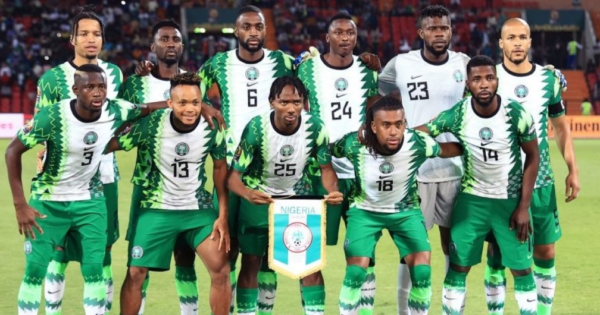
As the anticipation builds, the football community is abuzz with excitement, the Super Eagles of Nigeria, three-time champions and five-time runners-up, are on the verge of knowing their opponents for the qualification race to the 35th Africa Cup of Nations (AFCON) finals.
The draw, scheduled to take place in Johannesburg, South Africa, on Thursday afternoon, promises to set the stage for an exhilarating journey towards one of Africa’s most prestigious football tournaments.
The ceremony will unfold within the iconic SuperSport studio, located in Johannesburg, South Africa
This city, known for its vibrant culture and historical significance, will host a momentous event where the future of African football will be charted.
The 48 countries vying for a spot in the finals will be meticulously sorted into 12 groups of four teams each.
The stakes are high, as the top two teams from eleven of these groups will secure direct qualification to the AFCON finals, scheduled to take place from December 21, 2025, to January 18, 2026.
The 12th group, uniquely featuring the host nation Morocco, will see Morocco automatically qualify regardless of their position in the group, alongside one other team.
The path to the AFCON finals is laden with challenges and fierce competition. The qualifying matches will be played across three FIFA windows – September, October, and November of this year.
These periods are strategically chosen to ensure optimal performance and minimal disruption to domestic leagues and international commitments.
For the Super Eagles, this qualification campaign is more than just a series of matches; it is a testament to their enduring legacy and a bid to reclaim their place at the pinnacle of African football.
Nigeria’s football history is rich with moments of triumph and resilience.
The Super Eagles have consistently been a formidable force in African football, boasting three AFCON titles (1980, 1994, and 2013) and numerous memorable performances.
The team’s legacy is built on a foundation of skill, determination, and an unyielding spirit. As they embark on this new qualification journey, the eyes of millions of fans will be fixed on their every move.
The draw for the AFCON qualifiers is a meticulous process that considers the rankings and recent performances of the participating teams.
The teams are divided into four pots, with each pot representing a tier of strength and capability. The composition of these pots will play a crucial role in determining the dynamics of the qualification groups.
Pot 1:
- Morocco
- Senegal
- Egypt
- Côte d’Ivoire
- Nigeria
- Tunisia
- Algeria
- Cameroon
- Mali
- South Africa
- DR Congo
- Ghana
Pot 2:
- Cape Verde
- Burkina Faso
- Guinea
- Gabon
- Equatorial Guinea
- Zambia
- Benin Republic
- Angola
- Uganda
- Namibia
- Mozambique
- Madagascar
Pot 3:
- Kenya
- Mauritania
- Congo
- Tanzania
- Guinea Bissau
- Libya
- Comoros
- Togo
- Sudan
- Sierra Leone
- Malawi
- Central African Republic
Pot 4:
- Niger Republic
- Zimbabwe
- Rwanda
- The Gambia
- Burundi
- Liberia
- Ethiopia
- Botswana
- Lesotho
- Eswatini
- South Sudan
- Chad
Also read: What Impact will New Super Eagles Squad Make in World Cup?
As a top-seeded team in Pot 1, Nigeria is poised to avoid some of the most formidable teams in the early stages of the qualifiers.
However, the Super Eagles will still face challenging opponents from the other pots. Notably, all of Nigeria’s current opponents in the ongoing 2026 FIFA World Cup qualifying race—Benin Republic, Lesotho, Rwanda, South Africa, and Zimbabwe—are part of the draw.
This overlap could potentially reignite familiar rivalries and add an extra layer of excitement to the qualification campaign.
Several factors will influence the outcome of Nigeria’s qualification campaign. These include the team’s preparation, player form, tactical approach, and the ability to handle pressure in crucial matches.
Effective preparation is paramount to success. The Nigerian Football Federation (NFF) must ensure that the Super Eagles have access to world-class training facilities and engage in rigorous preparation camps. Friendly matches against top-tier teams can also provide valuable match practice and help the team fine-tune their strategies.
The performance of individual players will play a crucial role in the qualification campaign. Key players like Victor Osimhen, Samuel Chukwueze, and Wilfred Ndidi must be in peak form and free from injuries. The NFF and coaching staff need to monitor player fitness levels and ensure that the team is at full strength for the qualifiers.
The tactical acumen of the coaching staff, led by the head coach, will be instrumental in navigating the challenges of the qualifiers. A well-thought-out tactical plan that leverages the team’s strengths and exploits the weaknesses of opponents can make a significant difference. Flexibility and the ability to adapt to different game situations will also be crucial.
The weight of expectations can be immense, especially for a team with a storied history like Nigeria. The players must maintain composure and focus, particularly in high-stakes matches. Mental resilience and the ability to perform
Beyond the qualification campaign, the ultimate goal is to excel at the AFCON 2025 finals. The tournament, hosted by Morocco, promises to be a grand spectacle of African football. Morocco, with its rich football culture and passionate fans, is expected to provide a vibrant and electric atmosphere for the tournament. The country’s modern stadiums and infrastructure will set the stage for a memorable competition.
For Nigeria, a successful qualification campaign will be the first step towards reclaiming their position as one of Africa’s football powerhouses. The Super Eagles’ last AFCON triumph came in 2013, and the team is eager to add another title to their illustrious history. The road to glory, however, will not be easy, and the team must be prepared to face formidable opponents and overcome various challenges.
From Pot 2, teams like Cape Verde, Burkina Faso, and Guinea present significant challenges. Cape Verde, known for their tactical discipline and resilience, has been on an upward trajectory in recent years. Burkina Faso, with a blend of experienced and young talents, has consistently been a tough competitor in African tournaments. Guinea, with its rich pool of skillful players, can pose a substantial threat to any team.
Pot 3 features teams like Kenya, Mauritania, and Congo, who have the potential to spring surprises. Kenya, with their dynamic style of play and passionate fan base, can be a formidable opponent, especially on home turf. Mauritania, despite being relatively new to the top echelons of African football, has shown remarkable progress and resilience. Congo, with its storied football history, remains a team that cannot be underestimated.
From Pot 4, teams such as Niger Republic, Zimbabwe, and Rwanda could emerge as dark horses. Zimbabwe, with its rich football heritage and fervent supporters, always brings intensity to their matches. Rwanda, with a growing football infrastructure and determined squad, can be a tricky opponent. Lesotho and Eswatini, although considered underdogs, have the potential to cause upsets and disrupt the plans of more established teams.

