
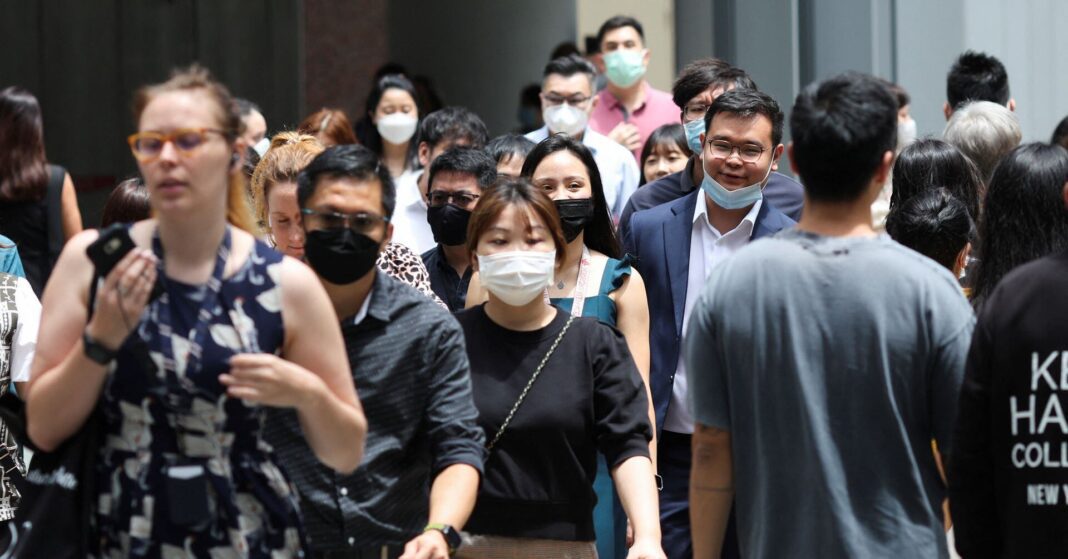

Amid an increase in COVID-19 cases, Singapore is strongly promoting the use of masks in crowded areas, urging individuals to wear them as a precautionary measure.
Amid the persistent surge in COVID-19 cases in Singapore, the Ministry of Health (MOH) has been actively collaborating with hospitals to implement a range of contingency measures aimed at effectively managing the situation. These measures include ensuring sufficient manpower and deferring non-urgent elective surgeries, as emphasized by the MOH.
In light of the escalating number of cases, the MOH strongly emphasizes the importance of wearing masks in crowded places, even for individuals who may not exhibit any symptoms of illness. This recommendation holds particular significance in indoor settings and when interacting with vulnerable individuals. By adhering to this guidance, the public can contribute to reducing the potential spread of the virus and safeguarding the well-being of the community.
Recent data released by the ministry on Friday (Dec 15) revealed a significant increase in the estimated number of COVID-19 cases during the period of December 3 to 9. The figures surged to 56,043 cases, representing a staggering 75 percent rise compared to the previous week’s count of 32,035 cases. Furthermore, there has been a noticeable escalation in average daily COVID-19 hospitalizations, rising from 225 to 350, with the average daily cases in the intensive care unit increasing from four to nine.
Of note, the majority of cases are attributed to the JN.1 variant, which is a sublineage of BA.2.86. However, based on the available international and local data, the MOH has clarified that there is currently no clear evidence indicating that BA.2.86 or JN.1 are more transmissible or cause more severe disease than other circulating variants. This information aims to provide reassurance while emphasizing the importance of adhering to preventive measures.
The ministry urges the public to exercise personal and social responsibility, particularly individuals experiencing symptoms of acute respiratory infection. It is advised that those with such symptoms should stay at home and avoid contact with others to prevent potential transmission. Furthermore, for individuals planning to travel, the MOH recommends wearing masks at airports, purchasing travel insurance, and avoiding crowded areas with poor ventilation. By adopting these precautions, individuals can contribute to reducing the risk of exposure and transmission.
In order to preserve the capacity of hospitals to cater to patients in need of acute care, the MOH emphasizes the significance of seeking medical treatment at a hospital’s emergency department solely for serious or life-threatening emergencies. This approach ensures that individuals with severe illnesses receive timely treatment while allowing hospitals to effectively manage their resources and prioritize those in critical need.
In sum, Singapore’s Ministry of Health remains committed to taking proactive measures in collaboration with hospitals to navigate the escalating COVID-19 situation. By encouraging mask-wearing, promoting personal responsibility, and implementing strategic measures, the ministry aims to mitigate the impact of the virus and protect the health and well-being of the population.
MEASURES TO MANAGE HEALTHCARE CAPACITY
The Ministry of Health has collaborated with public hospitals to develop contingency plans aimed at effectively managing the current situation. These plans include ensuring sufficient manpower and postponing non-essential elective surgeries, allowing for an increased bed capacity to cater to urgent cases requiring acute care.
Furthermore, to optimize patient placement, hospitals are utilizing step-down facilities such as Transitional Care Facilities and alternative care models like Mobile Inpatient Care@Home (MIC@Home). These measures ensure that patients are appropriately placed based on their needs and condition.
To further augment the existing capacity, a second COVID-19 Treatment Facility will be operational this weekend at Singapore EXPO Hall 10, complementing the existing facility at Crawfurd Hospital. This additional facility will contribute towards accommodating the growing number of cases and providing the necessary care and treatment.
Together, they will be able to care for more than 80 stable COVID-19 patients who do not require intensive hospital care.
“If the need arises, the CTF (COVID-19 Treatment Facility) capacity at EXPO can be further increased,” said MOH.