


Middle East tensions have reached a new peak in January 2026. Recent reports suggest that Iran’s Supreme Leader, Ayatollah Ali Khamenei, has been moved to a high-security underground bunker in Tehran amid fears of a possible US military strike. This development comes as President Donald Trump confirmed the deployment of a massive naval fleet, including the USS Abraham Lincoln aircraft carrier, toward the region, further intensifying Middle East tensions.
Why Khamenei Moved Underground
According to sources cited by Iran International, Iranian security and military officials reportedly relocated Khamenei following assessments of an increased risk of US action. The bunker is described as a specialized, fortified facility with interconnected tunnels, designed for extreme wartime scenarios. Reports also indicate that his third son, Masoud Khamenei, is temporarily handling day-to-day affairs, acting as the main liaison between the Supreme Leader’s office and Iran’s government ministries.
This move adds another layer to Middle East tensions, highlighting the seriousness of the current geopolitical climate and the heightened anxiety within Iran’s leadership.
Also Read: “Evacuate Tehran Immediately” – Trump’s Urgent Warning as War Tensions Escalate
The US Military Build-Up
The current spike in Middle East tensions coincides with Trump’s confirmation of a substantial US naval presence headed to the Persian Gulf. The “armada” reportedly includes the USS Abraham Lincoln aircraft carrier and multiple guided-missile destroyers. While Trump framed the deployment as a precaution, the movement sends a clear warning to Tehran and elevates Middle East tensions worldwide.
Military analysts say such deployments are typically designed to deter hostile actions and signal strength. However, the presence of an entire strike group inevitably escalates Middle East tensions further in an already volatile region.
Domestic Unrest in Iran
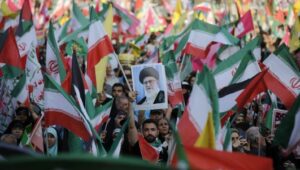
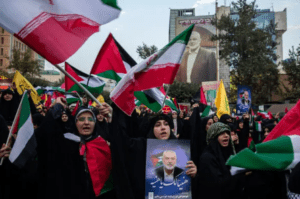
Domestic unrest also adds to Middle East tensions. Widespread protests continue across Iran, with reports of thousands of casualties and tens of thousands of arrests. The unrest has forced Iranian officials to adopt extreme security measures. While Khamenei’s bunker relocation has been widely reported, Tehran has not officially confirmed the move. Iranian diplomats insist that the Supreme Leader remains in communication with key officials, showing how internal politics are now a core driver of Middle East tensions.
Potential Regional Impact
Middle East tensions are now at a critical point, with both domestic and international dynamics contributing to uncertainty. Experts warn that any misstep could rapidly escalate into a larger conflict. Iran has publicly warned that any military attack would be treated as an all-out war, signaling a strong response if provoked.
The US fleet’s presence, combined with Iran’s heightened security and domestic unrest, creates a scenario that directly intensifies Middle East tensions. Analysts emphasize the importance of careful diplomatic management to prevent unintended escalation while maintaining deterrence.
Why This Matters
The current Middle East tensions have global implications. Oil markets are already reacting to potential conflict in the Persian Gulf, and international stakeholders are closely monitoring the situation. Any conflict in the region could disrupt trade routes, impact energy prices, and increase geopolitical instability.
For citizens and businesses, understanding the dynamics behind Iran’s defensive measures and the US military buildup is crucial. These developments demonstrate how domestic unrest, leadership decisions, and international deterrence strategies converge to create complex crises, continuously fueling Middle East tensions.
Key Takeaways
-
Middle East tensions are intensifying as reports suggest Iran’s Supreme Leader is in an underground bunker.
-
The US has deployed a significant naval fleet to the region to deter potential Iranian aggression.
-
Domestic unrest in Iran adds additional pressure on the leadership.
-
Analysts warn that any miscalculated move could escalate into broader conflict with global economic implications.
-
Careful diplomacy is crucial to preventing further escalation of Middle East tensions.
As the situation continues to develop, international observers are watching closely. While reports remain partially unverified, the combination of military deployments, internal political pressure, and regional geopolitics ensures that Middle East tensions remain at an unprecedented level in 2026.