

By Edet Ikotidem
The discussion over the proposed Ibom Deep Sea Port has continued to elicit heated arguments in Akwa Ibom State and beyond. Regrettably, many of those writing and commenting on this matter seem to miss the point altogether.
Ibom Deep Sea Port: Let Facts, Not Politics, Determine Its Location
The argument is not about names, ethnic group, political interest or territorial sentiment. It is really about location. Where is the best location for the Ibom Deep Sea Port to be sited to ensure its sustainability and competitiveness?
This question deserves careful, objective, and professional consideration.
Ports are not built merely because people desire them. They are established based on technical studies, environmental assessments, navigational requirements, economic viability, and international maritime standards. Across the world, successful seaports are located where nature and science combine to provide the best conditions for maritime operations.
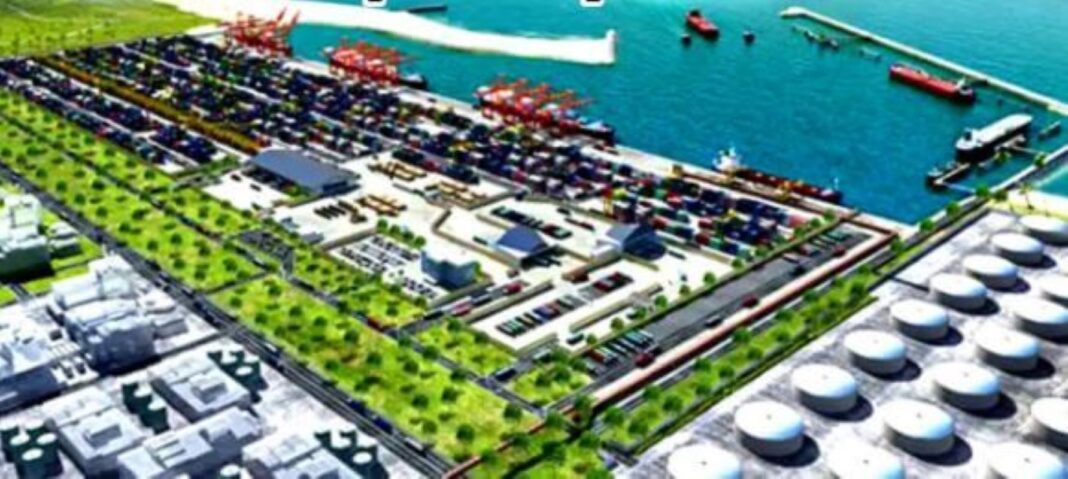
Ibom Deep Sea Port
Many stakeholders seem to be approaching the Ibom Deep Sea Port discussion from emotional and political perspectives rather than from technical realities. While every community has the right to express its views and protect its interests, it is important to understand that the success of the project should be the ultimate goal.
The critical question should be simple: Which location offers the best conditions for the port to thrive?
One of the factors often discussed is sea depth. This is where logic and practical wisdom must prevail. There is a significant difference between naturally occurring sea depth and sea depth that must be artificially created through continuous dredging.
Nature provides what many experts refer to as natural deep-water advantages. Where the sea is naturally deep, larger vessels can navigate more easily, maintenance costs are lower, and port operations become more efficient. On the other hand, where the sea is shallow, extensive dredging may be required to achieve the desired depth for modern ships.
The question therefore becomes straightforward: Which is better—God-given sea depth or man-made sea depth?
While engineering solutions can achieve remarkable results, they often come with huge financial implications. Continuous dredging requires substantial investment and recurring maintenance costs. Natural deep-water locations reduce these burdens and improve the port’s attractiveness to global shipping companies.
This does not mean that communities should be ignored. Far from it. Every stakeholder must be consulted. Every concern deserves a hearing. Every affected community should have a seat at the table. However, consultation should not be mistaken for confrontation, and dialogue should not be replaced with pressure tactics.
Also Read: Ibom Deep Sea Port Deserves a Ministry of Blue Economy, Not a Departmental Afterthought
Force rarely solves complex developmental issues.
History has shown that major infrastructure projects succeed when governments, host communities, investors, technical experts, and regulatory authorities work together in mutual understanding. Attempts to impose positions through political pressure may only delay progress and discourage investors.
Investors seek stability, certainty, and cooperation. They are more likely to commit billions of naira when they see stakeholders united around a common vision. They become hesitant when disputes dominate the headlines and create uncertainty about the future of a project.
This is why all parties must respect the findings of competent technical studies and the recommendations of relevant authorities. Experts are trained to evaluate coastal characteristics, environmental impacts, shipping requirements, and economic projections. Their assessments should guide decisions more than emotions or political considerations.
Akwa Ibom has waited for decades for the realization of the Ibom Deep Sea Port. The project represents one of the greatest economic opportunities in the state’s history. It has the potential to transform the economy, create thousands of direct and indirect jobs, attract industries, increase government revenue, and position the state as a major maritime hub in West and Central Africa.
The benefits extend beyond Akwa Ibom. Nigeria stands to gain immensely. The country needs additional world-class ports to handle increasing trade volumes, reduce congestion in existing ports, and strengthen its position in regional and global commerce.
The international maritime community is also watching with interest. Shipping companies, logistics operators, manufacturers, exporters, and investors all understand the strategic importance of a functional deep sea port along Nigeria’s coastline.
For this reason, the conversation must move beyond politics and focus on what will make the port successful for generations to come.
No community benefits if the project is delayed indefinitely. No political victory is worth sacrificing a transformational economic asset. No temporary advantage should outweigh the long-term prosperity that the port can bring to the state and the nation.
The dream of the Ibom Deep Sea Port is bigger than any individual, community, or political interest. It is a project that can redefine the economic future of Akwa Ibom and contribute significantly to Nigeria’s maritime development.
Let stakeholders engage constructively. Let experts provide guidance. Let relevant authorities make informed decisions based on facts and evidence. Most importantly, let politics not kill the establishment of the Ibom Deep Sea Port.
We need the port. Nigeria needs the port. The global maritime community is eager to utilize the opportunities it will create. The focus therefore should not be on who wins an argument but on ensuring that the port is located where it can succeed, compete, and deliver maximum benefits for generations yet unborn.