

By Edet Ikotidem
The renewed commitment by Governor Umo Eno to the realization of the Ibom Deep Sea Port has once again brought the project to the forefront of public discourse in Akwa Ibom State.
Ibom Deep Sea Port Deserves a Ministry of Blue Economy, Not a Departmental Afterthought
Fresh from his investment drive in France, the governor reassured stakeholders that investors remain committed to the project and are expected in the state within weeks to advance discussions. This is encouraging news for a state that has waited decades to see its dream of becoming a maritime and industrial hub come to fruition.
However, as the state prepares for the next phase of the project, there is an important conversation that deserves urgent attention. The Ibom Deep Sea Port should not be managed as a mere assignment under a ministry burdened with multiple responsibilities.
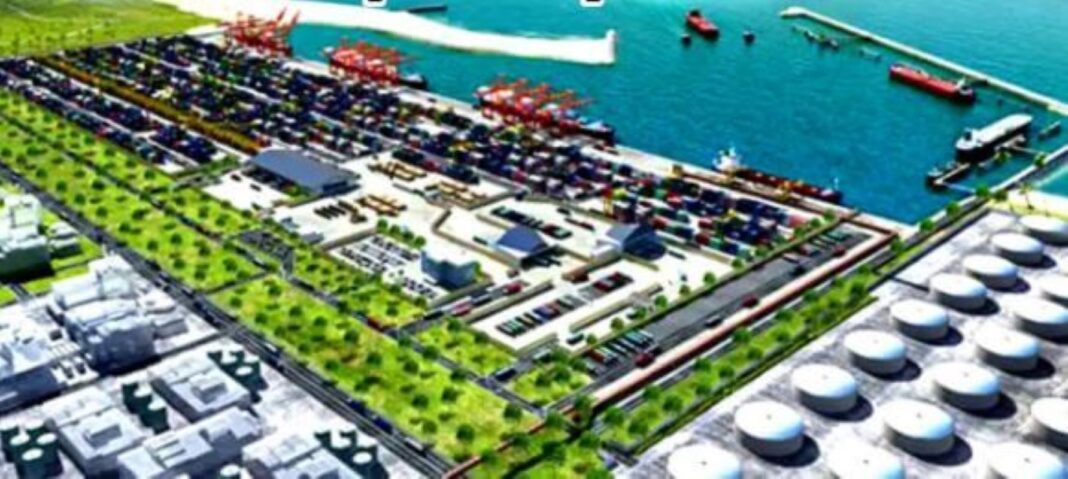
Ibom Deep Sea Port
Rather, Akwa Ibom State should establish a dedicated Ministry of Blue Economy to oversee the port and coordinate the vast economic opportunities associated with the state’s maritime assets.
The Ibom Deep Sea Port is not just another government project. It is arguably the most strategic economic investment in the history of Akwa Ibom State.
When completed, the port is expected to serve as a major gateway for international trade, attract industries, create thousands of direct and indirect jobs, stimulate infrastructure development, and generate substantial revenue for the state and the nation.
Projects of this magnitude require focused leadership, specialized expertise, and a clear institutional framework. The reality is that maritime development is a highly technical and capital-intensive sector.
It involves shipping, logistics, marine transportation, fisheries, coastal management, environmental sustainability, international trade, port operations, customs activities, and investor relations. These responsibilities cannot be effectively handled as side functions within a ministry whose attention is divided among numerous unrelated duties.
The global trend today is the adoption of the Blue Economy model. Nations and sub-national governments are increasingly recognizing the enormous economic value of oceans, rivers, coastal resources, and maritime activities.
The Blue Economy promotes sustainable utilization of aquatic resources to drive economic growth, improve livelihoods, and create employment while preserving the environment.
Akwa Ibom is naturally endowed to benefit from this emerging economic framework. With one of the longest coastlines in Nigeria, abundant marine resources, and strategic access to the Gulf of Guinea, the state possesses all the ingredients required to become a leading maritime economy in West Africa.
Yet, despite these advantages, the state’s maritime potential remains largely untapped. For decades, discussions about coastal development have focused primarily on oil and gas, leaving other sectors underdeveloped.
The Ibom Deep Sea Port presents an opportunity to change that narrative and diversify the state’s economic base.
Creating a Ministry of Blue Economy would provide a dedicated institutional vehicle for driving this transformation. Such a ministry would not only supervise the port project but would also coordinate policies relating to marine transportation, fisheries, coastal tourism, waterfront development, maritime education, and investment promotion.
It would also strengthen engagement with federal agencies, development partners, and private investors. Investors are often attracted not only by the viability of a project but also by the confidence that government structures can support long-term implementation. A dedicated ministry would signal seriousness, policy consistency, and administrative readiness.
Also read: Gov. Umo Eno Has Deployed A’Ibom Resources Well, Mismanagement Allegations Baseless – Group
The Federal Government has already shown the way by establishing the Ministry of Marine and Blue Economy. This decision reflects a growing recognition that maritime resources represent one of Nigeria’s most underutilized economic assets. Akwa Ibom should seize the opportunity to align with this national direction and position itself as the leading blue economy state in the country.
More importantly, the establishment of a Ministry of Blue Economy would ensure continuity. Governments come and go, but institutions endure. A dedicated ministry would provide the structure necessary to sustain the Ibom Deep Sea Port project beyond political tenures and changing administrations.
Critics may argue that creating another ministry would increase the cost of governance. While that concern is understandable, the potential economic returns far outweigh the administrative costs.
The issue is not the creation of bureaucracy for its own sake but the establishment of a focused institution capable of unlocking billions of naira in investment and generating long-term economic growth.
The success of the Ibom Deep Sea Port will not be determined solely by the construction of quays, terminals, and access roads. Its success will depend largely on the quality of planning, coordination, policy direction, and institutional support surrounding it. These are responsibilities that demand a dedicated ministry with a singular focus on maritime and coastal development.
As Governor Umo Eno continues efforts to attract investors and advance the project, this may be the right moment to think beyond the port itself and begin laying the institutional foundation for its future success. The creation of a Ministry of Blue Economy would demonstrate vision, foresight, and commitment to maximizing the state’s coastal advantages.
The Ibom Deep Sea Port is too important to be treated as an administrative appendage. It deserves dedicated oversight, strategic attention, and a ministry specifically designed to harness the vast opportunities of the blue economy.
If Akwa Ibom truly wants to become Nigeria’s maritime gateway, then the time has come to create a Ministry of Blue Economy and place the port where it rightfully belongs—at the center of the state’s economic future.