

Edet Ikotidem
President Joe Biden’s unexpected decision to end his bid for reelection in 2024 marks a significant moment in American political history.
His endorsement of Vice President Kamala Harris as the Democratic nominee highlights the critical dynamics within the Democratic Party and sets the stage for a historic presidential campaign. This essay will delve into the reasons behind Biden’s decision, the impact on the Democratic Party, the reaction from key political figures, and the broader implications for the upcoming presidential election.
Joe Biden Ends Bid for Second Term in White House
President Biden’s announcement to step down from the 2024 race came as a surprise to many. Despite his initial intentions to seek reelection, mounting concerns over his health and fitness to serve another term became increasingly prominent. Biden’s performance in a crucial debate against former President Donald Trump was a turning point.
Without a teleprompter or notes, Biden struggled to articulate his policies and rebut Trump’s arguments, leading to a series of gaffes that raised questions about his mental acuity and physical stamina
The pressure from within the Democratic Party also played a significant role. In the aftermath of the debate, numerous Democratic lawmakers, governors, and party members began to openly express their concerns about Biden’s ability to lead the country for another four years. The party’s apprehension was not only about his health but also about his capacity to secure a victory against a formidable Republican opponent in the upcoming election. This growing chorus of dissent made it increasingly challenging for Biden to maintain his campaign, ultimately leading to his decision to step aside
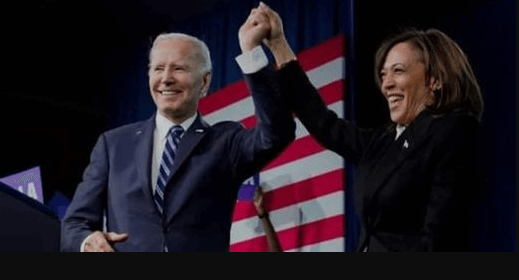
In endorsing Vice President Kamala Harris, Biden emphasized her qualifications and readiness to lead the nation.
He described his choice of Harris as his vice president in 2020 as one of his best decisions, underscoring her competence and the trust he places in her abilities.
Harris, who has been a prominent figure in the administration, now steps into a pivotal role as the Democratic Party’s nominee. Her candidacy represents a continuation of the administration’s policies and a commitment to addressing the nation’s pressing issues
The reactions to Biden’s decision and Harris’s nomination have been mixed. Former President Donald Trump, who was officially nominated by the Republican Party, criticized Biden’s presidency and suggested that Harris would be an easier opponent to defeat in the general election.
Trump’s comments reflect the broader Republican strategy to capitalize on perceived weaknesses within the Democratic camp
Within the Democratic Party, the reaction has been one of cautious optimism. Many party members see Harris’s nomination as an opportunity to energize the base and bring a fresh perspective to the campaign. However, there are also concerns about the challenges she will face in unifying the party and appealing to a broad electorate. Harris’s ability to navigate these challenges will be crucial in determining the outcome of the election.
Biden’s decision to step down is unprecedented in modern American history. The last time a sitting president eligible for reelection chose not to run was in 1968 when President Lyndon B. Johnson stepped aside. Biden’s decision underscores the unique circumstances of his presidency and the intense scrutiny he faced regarding his health and fitness for office.
Also read: Why Americans Support for Joe Biden is Declining
The implications of this decision are far-reaching. For the Democratic Party, it represents a moment of transition and an opportunity to redefine its vision and strategy.
Harris’s candidacy will likely focus on continuing the administration’s efforts to address key issues such as healthcare, climate change, and economic inequality. However, she will also need to carve out her own identity and build a coalition that can secure a victory in the general election.
For the Republican Party, Biden’s decision presents both opportunities and challenges. Trump’s criticism of Biden and Harris is indicative of the aggressive campaign strategy that the Republicans are likely to employ.
However, they will also need to address the divisions within their own ranks and present a cohesive vision that can attract a majority of voters.
As the 2024 presidential campaign unfolds, both parties will face significant challenges and opportunities.
For the Democrats, unifying behind Harris and building a robust campaign infrastructure will be essential. Harris’s ability to connect with voters, articulate a clear vision, and address the concerns raised during Biden’s presidency will be critical factors in her success.
For the Republicans, the challenge will be to present a compelling alternative to the Democratic vision. Trump’s candidacy brings with it a mix of strong support and significant controversy. The party will need to balance these dynamics and focus on issues that resonate with a broad electorate.
As the nation prepares for the 2024 election, the focus will shift to the candidates and their ability to address the challenges facing the country. Harris’s historic candidacy offers a new chapter for the Democratic Party, while the Republicans gear up for a contentious and high-stakes election. The outcome will have profound implications for the future of American governance and the direction of the nation.