

Edet Ikotidem
Nigeria is on the brink of a significant nationwide strike as major labor unions have directed their members to shut down workplaces in response to the Federal Government’s handling of the proposed minimum wage.
This conflict, rooted in economic and social grievances, escalated after the government’s refusal to increase the minimum wage to the unions’ demand of N60,000.
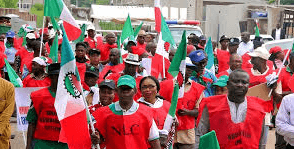
On Friday, organized labor, represented by the Nigeria Labour Congress (NLC) and the Trade Union Congress (TUC), declared that they would commence an indefinite strike beginning at midnight on Sunday, June 2, 2024.
This decision followed protracted negotiations with the government, which failed to yield an agreement acceptable to the unions.
The NLC President Joe Ajaero, alongside his TUC counterpart Festus Osifo, has expressed severe disappointment and frustration with the Federal Government’s reluctance to finalize and enact a new National Minimum Wage Act.
Labor Unions vs. Federal Government
Failed Negotiations and Immediate Triggers
The ultimatum issued by the unions set a deadline of May 31, 2024, for concluding negotiations. Despite this, discussions broke down on Tuesday after both parties presented their final offers.
The government had initially proposed a minimum wage of N57,000, which they later increased by N3,000 to meet the N60,000 mark.
However, this proposal was rejected by the labor unions, who viewed it as inadequate to meet the rising cost of living and inflationary pressures faced by workers.
In contrast, the unions had initially demanded a significant increase to N497,000 but later adjusted their demand by reducing N3,000, bringing it to N494,000.
This strategic reduction was intended to show flexibility and willingness to compromise, but the gap between the government’s offer and the unions’ demands remained too wide to bridge.
Broader Economic and Social Implications
The labor unions’ insistence on a higher minimum wage is rooted in the deteriorating economic conditions in Nigeria. Inflation has eroded the purchasing power of ordinary Nigerians, making it difficult for many to afford basic necessities. The unions argue that the current minimum wage is insufficient to provide a decent standard of living, pushing many workers into poverty.
Furthermore, the unions have also demanded the reversal of the recent increase in electricity tariffs to N65/kWh.
The rise in tariffs has exacerbated the financial burden on households and businesses, leading to widespread discontent. The unions contend that the government’s policies are not only failing to protect workers’ interests but are also contributing to economic hardships.
Union Mobilization and Solidarity
In response to the government’s stance, various sectors have mobilized in solidarity with the strike.
The Academic Staff Union of Universities (ASUU), through its President Emmanuel Osodeke, has directed lecturers across the country to join the strike. This move highlights the broad support for the labor unions’ cause and underscores the widespread dissatisfaction with the government’s policies.
The ASUU’s involvement means that educational institutions, already grappling with numerous challenges, will face further disruptions. This action emphasizes the severity of the unions’ grievances and their determination to pressure the government into making concessions.
Similarly, aviation unions, including the National Union of Air Transport Employees, the Air Transport Services Senior Staff Association of Nigeria, the Association of Nigerian Aviation Professionals, and the National Association of Aircraft Pilots and Engineers, have instructed their members to withdraw services across airports in Nigeria.
This directive is expected to cause significant disruptions in air travel and logistics, impacting both domestic and international flights.
Potential Impacts on the Economy
The nationwide strike is anticipated to have far-reaching implications for Nigeria’s economy. Key sectors, including transportation, education, healthcare, and public administration, are likely to be paralyzed, leading to substantial economic losses. Businesses will suffer from reduced productivity, while disruptions in essential services will affect the daily lives of millions of Nigerians.
Moreover, the strike could also undermine investor confidence in the Nigerian economy. Prolonged industrial action creates an environment of uncertainty, making it difficult for businesses to plan and operate effectively. This uncertainty could deter both domestic and foreign investment, further exacerbating the economic challenges facing the country.
Government Response and Prospects for Resolution
In the face of mounting pressure, the Federal Government has called for continued dialogue and negotiations to resolve the impasse. However, the unions have remained steadfast in their demands, insisting that any resolution must address the core issues of wage increases and electricity tariffs.
Also read: Hardship: President Tinubu Directs Pastor Umo Eno, Other States Governors to Clear All Outstanding Salary Arrears, Gratuities, Pension to Workers
The government’s response will be critical in determining the duration and impact of the strike. A conciliatory approach that seeks to address the unions’ concerns while balancing fiscal constraints could pave the way for a resolution. On the other hand, a hardline stance could lead to a protracted and acrimonious conflict with severe consequences for the country.
Historical Context of Labor Movements in Nigeria
Labor movements in Nigeria have a rich history of advocating for workers’ rights and social justice. The NLC and TUC have often been at the forefront of these struggles, using strikes and protests as tools to press for better wages, working conditions, and social policies. The current strike is part of this long tradition of labor activism, reflecting the unions’ role as critical stakeholders in the socio-economic landscape of Nigeria.
Over the years, labor unions have played a pivotal role in shaping public policy and holding the government accountable. Their actions have led to significant policy changes and improvements in workers’ welfare.
The current strike is a continuation of this legacy, emphasizing the unions’ commitment to advocating for the interests of their members.
Public Support and Civil Society Involvement
Public support for the strike is likely to be mixed, reflecting the complex socio-economic dynamics in Nigeria. While many workers and their families support the unions’ demands for higher wages and better living conditions, others may be concerned about the immediate disruptions and economic costs associated with the strike.
Civil society organizations and advocacy groups may also play a role in mediating the conflict and advocating for a resolution. These groups can provide a platform for dialogue and help bridge the gap between the government and labor unions. Their involvement could be crucial in fostering a more constructive and solution-oriented approach to resolving the crisis.
To conclusion, the nationwide strike initiated by Nigeria’s major labor unions represents a significant challenge for the Federal Government and the country as a whole. Rooted in economic grievances and a demand for better wages and living conditions, the strike underscores the urgent need for policies that address the needs of ordinary Nigerians.
The outcome of this conflict will depend on the willingness of both the government and the unions to engage in meaningful dialogue and find a mutually acceptable resolution. As the strike unfolds, its impact on the economy, public services, and the broader socio-political landscape will be closely watched. Ultimately, the resolution of this crisis will require a careful balancing of economic realities and the legitimate aspirations of Nigerian workers.