

Rafael Anderson
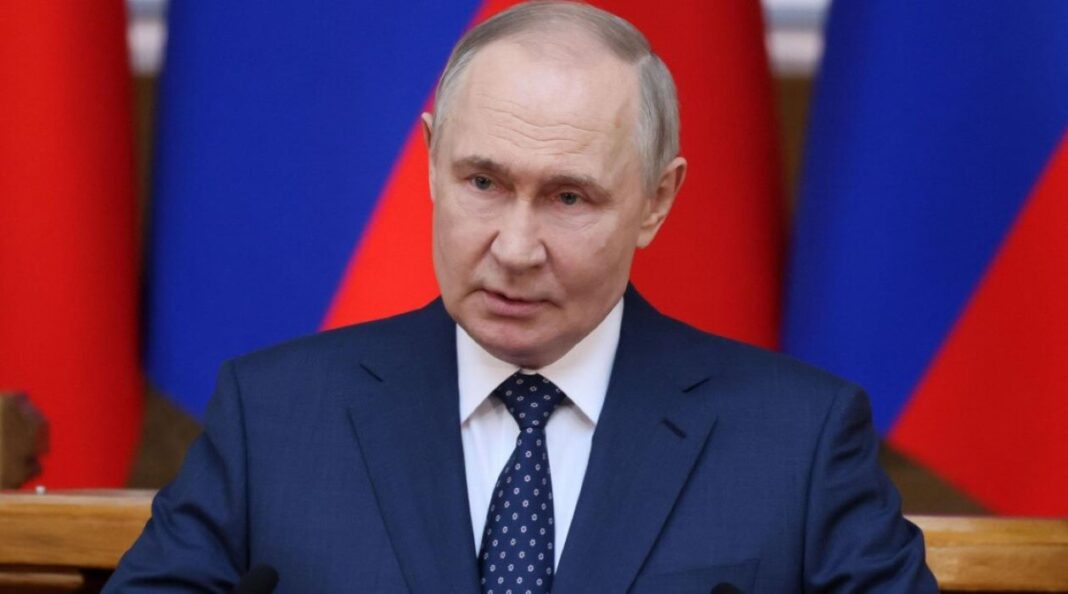
Russian President Vladimir Putin has declared a unilateral three-day ceasefire in Ukraine next month, a move Ukrainian officials immediately met with skepticism. The Kremlin announced that “all military actions” in Ukraine would be suspended from midnight May 8 to midnight May 11, citing “humanitarian considerations” connected to Russia’s annual World War II Victory Day celebrations on May 9 and the 80th anniversary of Nazi Germany’s defeat.
However, Ukrainian leaders and their U.S. allies are urging Putin to accept a much broader ceasefire deal, warning that a short pause is not enough to bring real peace after more than three years of devastating war.
The White House responded cautiously to the announcement, emphasizing that a permanent solution is still the goal.
“While President Trump welcomes Vladimir Putin’s willingness to pause the conflict, the president has been very clear he wants a permanent ceasefire and to bring this conflict to a peaceful resolution,” said U.S. National Security Council Spokesman Brian Hughes on Monday.
Meanwhile, pressure continues to build. U.S. Secretary of State Marco Rubio highlighted that this week would be “very critical” in determining whether diplomacy can finally bring an end to the fighting.
Also Read:FBI Arrests 22 Nigerians in Major Sextortion Crackdown Linked to Teen Suicides
Earlier this year, Ukrainian President Volodymyr Zelensky accepted a U.S.-backed proposal for a 30-day ceasefire. However, the Kremlin has so far refused to agree to the longer truce, opting instead for short-term pauses tied to symbolic dates — a strategy Kyiv views with deep suspicion.
In response to Putin’s latest proposal, Zelensky’s chief of staff, Andriy Yermak, thanked Trump for supporting a full and lasting ceasefire.
“Only a permanent, unconditional, and comprehensive ceasefire — not a temporary one, as Putin proposes — is necessary to end the war,” Yermak wrote in a post on X (formerly Twitter).
Ukrainian Foreign Minister Andrii Sybiha also rejected Moscow’s timeline, saying,
“If Russia truly wants peace, it must cease fire immediately. Why wait until May 8th?”
Sybiha reiterated Ukraine’s readiness to support a “lasting, durable, and full ceasefire,” something Kyiv has been consistently proposing for at least 30 days.
Ukrainian officials have good reason to be wary. Just last month, Putin announced a 30-hour Easter ceasefire. Kyiv cautiously agreed, but within hours, Ukrainian forces reported over 2,900 violations by Russian troops along the frontlines. Moscow, for its part, accused Ukraine of breaking the truce, but independent monitoring and casualty reports suggest otherwise.
Since the Easter ceasefire declared on April 19, Russian attacks have reportedly killed at least 62 civilians and injured another 290, according to a CNN tally based on figures from local authorities and emergency services. Ukrainian soldiers in the field described the supposed ceasefire as largely meaningless, with enemy drones and artillery fire continuing without letup.
“The Easter ceasefire has already shown that there was no ceasefire in reality,” a senior officer in Ukraine’s Security Service (SBU), known by the call sign Bankir, told CNN.
“There were a lot of enemy drones and artillery continued to work without reducing the intensity,” Bankir added, calling it nothing more than a “public statement not confirmed in practice.”
The Trump administration is growing increasingly frustrated with the slow progress in brokering a peace deal. U.S. President Donald Trump, who returned to Washington after attending Pope Francis’ funeral in Rome, delivered one of his strongest messages yet to Putin.
“We have the confines of a deal, I believe, and I want him to sign it and be done with it and just go back to life,” Trump said.
Following a brief but reportedly productive meeting with Zelensky at the Vatican, Trump made it clear that the window for securing a deal may soon close.
Senior U.S. officials believe that the coming weeks will be critical. Both Russia and Ukraine are under immense international pressure to show good faith and end the war that has devastated millions of lives.
For now, though, Ukraine remains deeply skeptical that a three-day pause — conveniently timed for Russian national holidays — will translate into meaningful peace. As previous experiences show, declarations are one thing; actions on the battlefield tell the real story.