
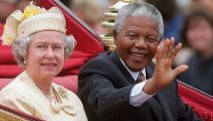

South Africa, a nation with a special and complicated history with the British Crown, has reacted to the passing of Queen Elizabeth in a remarkably subdued manner over the past week as they ponder over Colonial Memories.
Many people have chosen to focus, if at all, on the hotly contested and continuing legacy of the British Empire, while others have opted to mourn her in quiet and recall her special bond with Nelson Mandela.
“I wouldn’t say I don’t like the queen – no, no, no. But my daily reality is [affected] by the impact of colonization,” said Sibulele Steerman, a college student, standing next to an open sewer, in a poor town outside Cape Town.
Today, many young South Africans in the particular question the compromises associated with their country’s transition to democracy in the early 1990s, demanding that Western countries do much more to recognize centuries of colonial exploitation. “My grandmother loved the queen. But we are a different generation,” Ms. Steerman said, noting this week’s calls on social media here for the UK to return ‘stolen’ South African diamonds found in the Crown Jewels. The Cullinan Diamond, the largest diamond ever found, was presented to King Edward VII by the colonial authorities on the occasion of his 66th birthday.
Shortly after World War II, Queen Elizabeth – then a princess – visited the southern tip of Britain’s vast African empire for the first time, arriving with her family in Cape Town in 1947 on a converted warship.
Colonial Memories In South Africa
At that time, South Africa was still independent and still had the British King George VI. as head of state. The black and white newsreel footage showed Elizabeth and her sister Margaret, smiling and queuing, in a holiday mood, with the sailors on the deck of HMS Vanguard in the shadow of Table Mountain.
But when the royal party landed, it turned its attention to the urgent task of trying to help Britain maintain its global influence and trade ties, at a time when many countries were shaking off the shackles of empire in the wake of war.
While in Cape Town, Princess Elizabeth turned 21 and marked her moment with a serious talk about her future role as queen.
“I declare to all of you that my whole life, long or short, will be devoted to your service and to the service of our great imperial family to which we all belong,” declared the princess in a speech sent around the world.
Hours later, the port-city elites, almost exclusively white, gathered in their elegant suits for a royal birthday party. A black man was also present that evening: rising ballet star Johaar Mosaval.
“I felt absolutely ecstatic. Honored. Overwhelmed. I thought it was extraordinary to see her on her 21st birthday,” recalled Mr. Mosaval, now a frail but elegant 94-year-old in Cape Town this week. A few years later, he was selected to dance at Queen Elizabeth’s coronation in London.
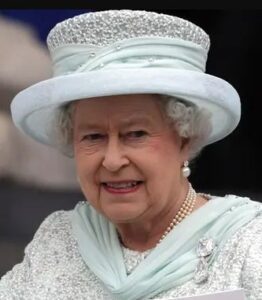
“I was the first black man in the world to join the Royal Ballet. I still have the coronation program as proof that I danced a solo for Her Majesty,” he said proudly, praising the Queen for “the very important role. which he has interpreted in everyone in the world ”.
Over the past week, South Africa, a country with a unique and complex relationship with the British Crown, has reacted in a surprisingly muted way to the death of Queen Elizabeth. While some of her here mourn her silently and particularly remember her unique friendship with Nelson Mandela, many others have chosen to focus, if at all, on the bitterly contested and enduring legacy of the British Empire. “I wouldn’t say I don’t like the queen – no, no, no. But my daily reality is [affected] by the impact of colonization,” said Sibulele Steerman, a college student, standing next to an open sewer. in a poor town outside Cape Town.
Young South Africans question the compromises associated transition to democracy
Today, many young South Africans in the particular question the compromises associated with their country’s transition to democracy in the early 1990s, demanding that Western countries do much more to recognize centuries of colonial exploitation.
“My grandmother loved the queen. But we’re a different generation,” Steerman said, pointing to this week’s appeals, on social media here, for Britain to return what they believe to be the “stolen” South African diamonds are the ones found in. The crown jewels. The Cullinan diamond, the largest ever found, was donated to King Edward VII by colonial officials on his 66th birthday.
It was shortly after World War II that Queen Elizabeth, then a princess, first visited the southern tip of Britain’s vast African empire, arriving in Cape Town in 1947 with her family on a converted warship. At that time, South Africa was independent, it still had the British King George VI as head of state.
The black and white newsreel footage showed Elizabeth and her sister Margaret, smiling and queuing, in a holiday mood, with the sailors on the deck of HMS Vanguard in the shadow of Table Mountain.
But when the royal party landed, it turned its attention to the urgent task of trying to help Britain maintain its global influence and trade ties, at a time when many countries were shaking off the shackles of empire in the wake of war. In Cape Town, Princess Elizabeth turned 21 and marked the moment with a serious speech about her future role as Queen.
“I declare before all of you that my whole life, long or short, will be devoted to your service and to the service of our great Imperial family to which we all belong,” the Princess said in a speech broadcast around the world.
Hours later, the port city’s elite – almost entirely white – gathered in their finery for a royal birthday celebration. Also, present that night was a black man – rising ballet star Johaar Mosaval.
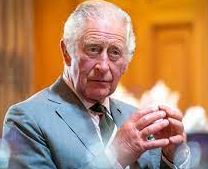
“I felt absolutely ecstatic. Honored. Overwhelmed. I thought it was extraordinary to see her on her 21st birthday,” recalled Mosaval, now a frail but elegant 94, in Cape Town this week.
A few years later, he was selected to dance at Queen Elizabeth’s coronation in London. “I was the first black person in the world to join the Royal Ballet. I still have the coronation program as proof that I danced a solo for Her Majesty,” he said proudly, praising the Queen for “the big thing”. the role she has played around the world”.
The 1947 royal tour of southern Africa, conducted mainly by train, was hailed as a great success.
“These events in South Africa are followed by the whole world. They will silence many voices who only want to say that the era of the British Empire is over,” explained a British journalist. But the truth was that the British Empire was already falling apart.
In the case of South Africa, a racist white minority government came to power, promoting a brutal policy of racial segregation known as apartheid, which ravaged the lives of the black majority and led to the exit from the Commonwealth countries – a loose network of former British colonies – and decades of international isolation.
It took half a century before Queen Elizabeth could return to South Africa after the country joined the Commonwealth. In 1995, she once again landed in Cape Town to be greeted by newly elected President Nelson Mandela – who had just been released from several years in prison to oversee a turbulent but ultimately successful transition from apartheid to democracy.
It was a very unusual relationship,” Mandela’s private secretary Zelda La Grange recalled the bond the two also-royal figures quickly developed. “He once visited her at Buckingham Palace…and said, ‘Elizabeth, you’ve lost weight.’ And of course, the Queen burst out laughing. And after that Mr. Mandela’s wife said, ‘You can’t call her Elizabeth, she’s the Queen of England.’ And he said, ‘Why not? She calls me Nelson.
But does this intimate relationship have a price? Some believe this contributed to the refusal of Mandela’s ANC-led government to directly confront Britain over the issue of reparations – monetary compensation for the damage done to South Africa’s economy and society by centuries of exploitation and colonization.
“I don’t think President Mandela raised the issue,” said Mamphela Ramphele, a prominent anti-apartheid activist and politician. “The queen as an individual probably worried. But the fact is that [she] was a symbol, and the head of the British [state], and no steps had really been taken to recognize, let alone structural immobility, built inequalities. in a racist and exploitative South Africa, both during the colonial period, under apartheid and even after apartheid “.
You have clearly noticed that the Commonwealth may have a lot in common, but the wealth has all been stored in London.
But the Queen’s visit to Cape Town in 1995 was nonetheless a powerful symbol of South Africa’s return to the international fold after apartheid and the end of its pariah status. Despite security concerns, the queen insisted on seeing the reality of the new South Africa and visited several plagued by violence.
“It was an important thing. People were curious to see her. There were around 10,000 people here and it was almost chaotic. But it mattered that she had come to the black township. She could have stayed in the city, and she wasn’t afraid, she wasn’t afraid, “said Ezra Cagwe, a retired sports coach who attended a packed royal event in the Langa municipality.
Also read: Queen Elizabeth 11’s funeral: Russia, Belarus, Myanmar Not Invited
“It’s not like people are that sad here today. [The visit] was a long time ago and she was old too,” Cagwe said. “I don’t think there is any connection between the UK and South Africa at all,” said a woman who was about to do laundry outside her makeshift shack.
“Nothing is better here. There is more violence, more crime, more poverty,” said one of the three schoolgirls passing by, admitting they knew very little about the British royal family and that they cared.
But older South Africans tend to remember positively the educational opportunities afforded to them during the era of empire – in stark contrast to the degrading treatment and racist “Bantu upbringing” suffered by the Blacks during apartheid.
There are still plenty of white South Africans in Cape Town who hold British passports and mourn the Queen’s death – although the TVs in the bar at the exclusive Kelvin Grove Club were decidedly switched to rugby and cricket during a recent visit. “I think [the Queen] was a big supporter of South Africa. Colonialism is a dirty word in this country, but I’m a supporter of colonialism and I think there were a lot of good things. .which probably outgrew the bad stuff,” Craig Strang said, sitting in front of a log fire with pals.
But the national mood – if callers from top radio stations are any reliable indicator – has shifted away from royal nostalgia and focused instead on the issue of colonization.
This is perhaps unsurprising, in a country bitterly divided over why, nearly three decades after the end of apartheid, so many South Africans are still struggling to overcome inequality and entrenched poverty.
“Most South Africans say, ‘Give us the opportunity to be candid in our assessment of [the Queen’s] legacy.’ the face of the British colonial empire, an institution that grew rich through violence, through theft, through oppression,” said Clement Manyatela, who broadcasts a popular morning show on moderate Radio 702.

