

By Edet Ikotidem
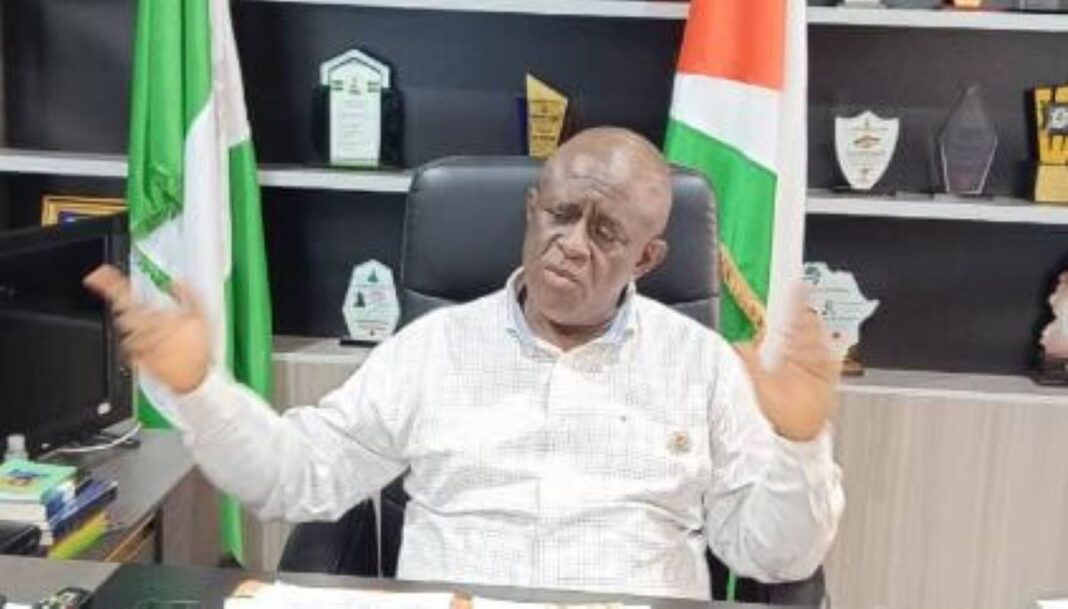
The Chairman of Ikot Ekpene Local Government Area Elder Aniefiok Nkom has outlined a range of infrastructure, economic empowerment, environmental and community development initiatives being implemented by his administration to improve living conditions, strengthen local economic activities and reposition the area for sustainable development.
Ikot Ekpene Council Unveils Infrastructure, Economic Empowerment and Cultural Revival Initiatives
The Chairman disclosed this while speaking with a delegation of the Association of Newspaper Publishers of Nigeria (ANPA), led by its President General, Pastor OsuiniAbasi Alfred. He said his administration had placed priority on the rehabilitation of public infrastructure, revenue generation, water supply, road safety, agriculture, youth empowerment and the preservation of Ikot Ekpene’s cultural heritage.
According to the Chairman, the old Local Government Secretariat, which had suffered years of deterioration, has been rehabilitated to restore its functionality and improve the working environment for staff and elected representatives.
He explained that the rehabilitation included improvements to the electrical system, toilets and councillors’ chambers, among other facilities.
Cultural Revival Initiatives
In the area of commercial development and revenue generation, the council is constructing a shopping mall along Umuahia Road. The facility is expected to accommodate 46 shops and has already generated considerable interest, with 84 applicants reportedly indicating their desire to secure spaces.
The initiative, he said, is designed not only to create a more organised commercial environment but also to expand the council’s revenue base and provide additional opportunities for local businesses.
The administration is also addressing challenges relating to water and electricity through the installation of solar-powered boreholes across the various wards.
On electricity infrastructure, the Chairman said the council was working to restore faulty transformers by replacing damaged components, including transformer oil and other critical parts, rather than immediately resorting to complete transformer replacement.
He said the approach was intended to provide a more cost-effective means of restoring electricity supply to affected communities.
In the transportation sector, the Chairman said the council had completed an abandoned motor park and embarked on the construction of speed bumps and the filling of potholes along major roads to improve road safety and reduce accidents.
He further disclosed that a new truck park was being developed around Iniakpan to better manage heavy-duty vehicles travelling from Calabar and other destinations.
The initiative is expected to reduce the movement and concentration of heavy-duty vehicles within the town centre and consequently ease traffic-related challenges.
A major component of the administration’s economic and cultural development agenda is the revival of Ikot Ekpene’s traditional raffia industry.
The Chairman said plans were underway to establish a Raffia Mall at the former motor park, providing local artisans with a dedicated and organised space to display, promote and market their products.
The initiative is expected to reinforce Ikot Ekpene’s historic identity as the “Raffia City” while creating new opportunities for artisans, traders and other players within the creative economy.
Beyond the proposed mall, the administration is also exploring the introduction of raffia craft training into the curriculum of secondary schools. According to the Chairman, the move would expose young people to the traditional craft, encourage skills acquisition and help preserve the cultural heritage of the area for future generations.
In agriculture, the council has commenced large-scale farming activities, including the cultivation of 12 hectares of cassava.
The Chairman said the agricultural initiative was aimed at strengthening food production, creating employment opportunities and encouraging residents, particularly young people, to embrace agriculture as a viable economic venture.
Also Read: “I Am Committed to the Development of My Community,” Uyo Ukpanah Tells ANPA
He explained that the administration’s empowerment programme was deliberately structured around skills acquisition and the provision of productive tools rather than indiscriminate cash distribution.
Under the programme, youths are trained and provided with starter equipment, including sewing machines and grass-cutting machines, to enable them establish small businesses and become economically productive.
Women who already operate small businesses are also being supported with modest grants, including ₦30,000, to strengthen and expand their businesses.
The Chairman added that beneficiaries were monitored after receiving support to ensure that the interventions were properly utilised and achieved their intended objectives.
The administration has also intensified efforts to address flooding through the desilting of drainage channels in Ikot Ekpene and other flood-prone locations.
The Chairman acknowledged the intervention of the state government through a flood-control contract awarded for Ikot Ekpene, noting that the combined efforts of the state and local governments would help improve drainage infrastructure and minimise the impact of seasonal flooding on residents and businesses.
On security, the Chairman said the council had maintained close working relationships with the police, village heads, community leaders and youth councils to prevent conflicts and promote peaceful coexistence.
Particular attention, he said, had been given to disputes involving farmers and cattle growers.
He explained that the local community network was being utilised to identify parties involved in disputes and facilitate appropriate compensation where crops were destroyed, with the objective of resolving disagreements before they escalate into violence.
In education, the Chairman noted that the state government had commenced payment of bursaries but said his administration had complemented the effort by providing personal support to indigent students and residents pursuing PhD programmes.
According to him, some beneficiaries have received assistance towards the payment of their full school fees, particularly those facing financial difficulties.
The range of ongoing interventions demonstrates an administration attempting to address multiple dimensions of local development—from infrastructure and commerce to agriculture, education, environmental management, security, youth empowerment and cultural preservation.
However, as Ikot Ekpene looks beyond immediate interventions, the larger challenge remains the development of a comprehensive, long-term economic strategy capable of transforming the area into a distinctive and globally competitive commercial and cultural destination.
The proposed shopping mall and plans to revive the raffia industry provide important foundations, but sustained investment in enterprise development, tourism, technology, agriculture, skills acquisition and private-sector participation could further strengthen the local economy.
The Chairman, nevertheless, expressed confidence that the ongoing projects and programmes would provide a solid foundation for a more vibrant, organised and economically productive Ikot Ekpene, while restoring the town’s identity as a centre of commerce, craftsmanship and community enterprise.