

George Sidwell
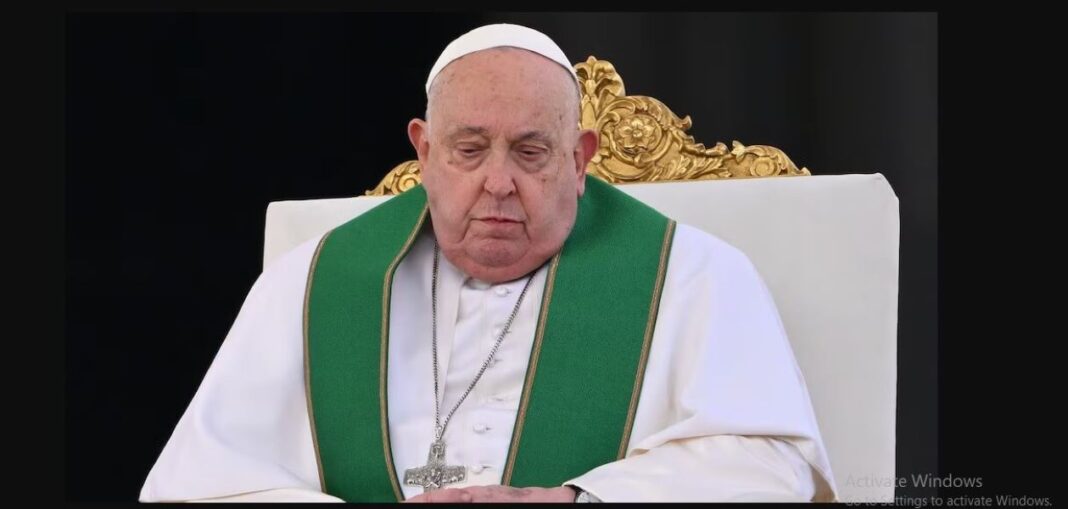
Today, April 26, 2025, the world gathered to bid an emotional farewell to Pope Francis, a leader who redefined the Catholic Church with compassion, humility, and a relentless commitment to social justice.
The funeral, held in the grandeur of St. Peter’s Square in Vatican City, drew an estimated 250,000 mourners — a powerful reflection of the global love and respect Pope Francis commanded throughout his papacy. Heads of state, religious leaders, royalty, and millions of faithful Catholics around the world paused today to honor a man who spent his life walking with the poor, the outcast, and the forgotten.
Born Jorge Mario Bergoglio in Buenos Aires, Argentina, Pope Francis became the first Latin American pope when he was elected in 2013. From the very first moments of his papacy — when he humbly asked the crowd at St. Peter’s to pray for him — Francis set a new tone: one of humility, simplicity, and radical inclusion.
Throughout his twelve-year papacy, Francis championed the causes of immigrants, the homeless, prisoners, and the environment. He opened the doors of the Church wider than ever before, reminding the world that faith must always walk hand-in-hand with mercy and love. His teachings on climate change, income inequality, and peace earned him admiration beyond religious circles, cementing him as one of the most influential moral voices of the modern era.
True to his humble nature, Pope Francis had instructed that his funeral be a simple, stripped-down affair, free from unnecessary grandeur.
The funeral Mass was led by Cardinal Giovanni Battista Re, and attended by a long list of global dignitaries including U.S. President Donald Trump, French President Emmanuel Macron, and Prince William.
However, even with the world’s powerful gathered, the spirit of the ceremony remained deeply personal, prayerful, and intimate — a true reflection of Francis’ own life philosophy.
His body was laid in a simple cypress wood coffin, lined with zinc, following a private sealing ceremony held before the public funeral.
Cypress wood, symbolizing humility and eternal life, was a fitting choice for a pope who had always lived simply, preferring modest apartments to palatial Vatican residences.
In a break from long-standing tradition, Pope Francis was not buried in St. Peter’s Basilica like most of his predecessors.
Instead, he chose the Basilica of St. Mary Major, a church that held personal meaning for him.
Throughout his papacy, Francis often visited this basilica to pray before the famous icon of the Virgin Mary, Salus Populi Romani, especially before and after important journeys.
By choosing to be laid to rest there, Francis once again placed personal devotion and humility above grandeur and protocol — a final testament to his unique spirit.
Also Read: FBI Arrests 22 Nigerians in Major Sextortion Crackdown Linked to Teen Suicides
As the Church now enters a period of mourning and reflection, the impact of Pope Francis’s life is impossible to overstate.
He leaves behind a Church that is more open, more compassionate, and more attuned to the needs of a suffering world.
He challenged Catholics — and indeed, people of all faiths — to think beyond tradition and doctrine, and to ask: Are we living with love? Are we caring for our neighbor? Are we protecting the vulnerable?
While the College of Cardinals will soon gather to elect a new pope, Pope Francis’ legacy is secure.
He was — and will forever be remembered as — the Pope of the People, a shepherd who walked among his flock, who listened more than he spoke, and who led not with a heavy hand, but with a heart wide open.
Today, as bells tolled across the Vatican and prayers rose into the Roman sky, the world said goodbye to a man who taught us all a little more about what it means to be human.
Rest in peace, Pope Francis. Your light will not be forgotten.