


Decentralized finance has become one of the fastest-growing movements in the financial world, changing how people interact with money, banks, and investments. Unlike traditional financial systems, decentralized finance eliminates the need for intermediaries like banks, brokers, or payment processors. Instead, it relies on blockchain technology and smart contracts to provide open, transparent, and accessible financial services. This shift is redefining global transactions and creating a financial ecosystem that is faster, cheaper, and more inclusive.

Decentralized Finance Redefining Transactions and Financial Systems
The foundation of decentralized finance lies in smart contracts, which are coded agreements that execute automatically once certain conditions are met. In traditional banking, a loan involves paperwork, middlemen, and lengthy approval processes. With decentralized finance, a loan can be approved instantly by interacting with a smart contract. This not only saves time but also reduces costs, making transactions smoother and more efficient for users worldwide.
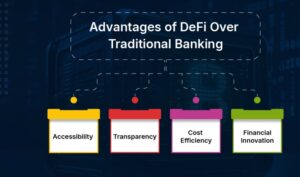
One of the most powerful impacts of decentralized finance is financial inclusion. Millions of people globally still lack access to banking services, either because of geography, strict regulations, or economic limitations. With decentralized finance, anyone with an internet connection and a digital wallet can participate. This opens opportunities for savings, borrowing, lending, and investing, empowering individuals in regions where traditional banks are inaccessible.

Transparency is another key advantage of decentralized finance. All transactions are recorded on the blockchain, meaning fraud and hidden charges become much harder to execute. Users can verify activity themselves without depending on a third party. Unlike banks that may freeze accounts or impose restrictions, decentralization gives people complete control over their funds. This freedom is one of the reasons adoption is growing rapidly across different countries.
Also Read: Stop Hidden Fees Draining Your Bank Account
Moreover, decentralized finance is democratizing investments. In the past, only wealthy individuals had access to certain financial products like yield farming, derivatives, or high-return investments. With decentralized finance, these opportunities are open to anyone, regardless of location or background. The decentralized nature of these platforms ensures that power is not concentrated in the hands of a few institutions but spread across global users.
However, it is important to note that decentralization also comes with risks. Since many platforms are still in their early stages, vulnerabilities exist. Security breaches, hacking incidents, and poorly written smart contracts have caused losses for some investors. Additionally, regulatory frameworks are still evolving, and governments worldwide are exploring how to balance innovation with consumer protection. This uncertainty means users should proceed with caution and only invest amounts they can afford to lose.
Despite these challenges, the growth of decentralization shows no signs of slowing down. Traditional banks and payment networks are already adopting blockchain technologies to remain competitive. Just as the internet revolutionized communication, decentralized finance is revolutionizing money. It offers speed, efficiency, transparency, and accessibility—qualities that the traditional financial system has long struggled to deliver.
Looking ahead, decentralized finance could become the backbone of a new global economy. By giving individuals more power over their assets, cutting out unnecessary costs, and opening opportunities for the unbanked, it is shaping a fairer financial future. While risks remain, the benefits are too significant to ignore. Decentralized finance is not just a trend—it is the foundation of how transactions and financial systems will operate in the years to come.
Most people assume the current financial structure will always remain the same, but history shows that change is inevitable. Technology often reshapes industries in ways no one predicts, creating opportunities and risks at the same time. Those who stay informed and adaptable are more likely to benefit from these shifts instead of being left behind.