

Akwa Ibom State has taken a bold and strategic step toward repositioning its tourism and leisure sector with the signing of a Memorandum of Understanding designed to revitalize key government-owned facilities. This latest move signals a serious commitment to strengthening the Akwa Ibom hospitality industry and unlocking its full economic potential.
Akwa Ibom Hospitality Industry Gets Major Boost
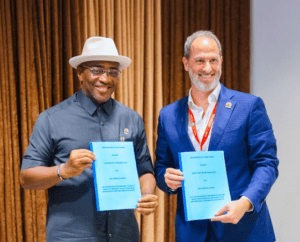
On Friday, February 27, 2026, the Akwa Ibom State Government formally signed an MoU with Aleph Technical and Advisory Services for the professional management of several major hospitality assets across the state. The agreement was signed at Government House, Uyo, shortly after Governor Umo Eno returned from a working visit to Abuja and CSS Farms in Gora, Nasarawa State.
The MoU covers four strategic properties: Ibom Icon and Golf Resort, Four Points by Sheraton, Ibom International Hotel, and the ARISE Palm Resort. These facilities are central pillars of the Akwa Ibom hospitality industry, representing significant investments intended to position the state as a leading tourism destination in Nigeria.
For years, these establishments have symbolized the state’s ambition in tourism and hospitality. However, like many publicly owned ventures, operational efficiency and optimal performance have remained ongoing challenges. This new partnership reflects a shift toward professionalized management and performance-driven results within the Akwa Ibom hospitality industry.
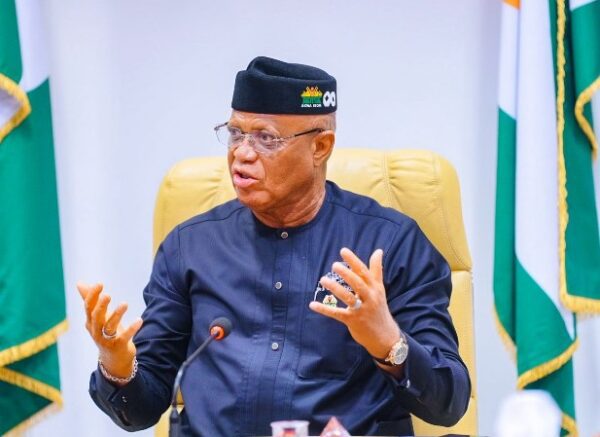
Speaking during the signing ceremony, Governor Umo Eno emphasized that Akwa Ibom possesses the infrastructure, natural attractions, and human capital necessary to become a major tourism hub. According to him, the missing link has not been vision but execution. He assured the management team of Aleph Technical and Advisory Services that his administration would provide the support required for them to succeed.
His remarks suggest a broader economic strategy. Strengthening the Akwa Ibom hospitality industry is not merely about running hotels efficiently. It is about stimulating economic activity, creating jobs, increasing internally generated revenue, and building a sustainable tourism ecosystem.
Earlier in his presentation, the Team Lead of Aleph Technical and Advisory Services, Jad Shamseddin, revealed that his team had spent several days in the state assessing the facilities. Their evaluation showed that the properties were built to impressive international standards. However, certain operational, structural, and strategic adjustments would be needed to maximize their performance.
He pointed out both the strengths and the weaknesses of each facility, expressing confidence that with focused improvements, they could achieve significant growth. His assessment reinforces the idea that the future of the Akwa Ibom hospitality industry lies not just in infrastructure, but in effective management, branding, service excellence, and consistent maintenance.
Also Read: Supreme Court Speaks: The Final Chapter in the Legal Battle of Bassey Albert
The agreement signed is an MoU, laying the groundwork for collaboration. A formal Hotel Management Agreement will follow after due diligence is completed. This careful, phased approach suggests that both parties are prioritizing transparency, accountability, and long-term sustainability in transforming the Akwa Ibom hospitality industry.
The Aleph delegation included Vice President of Food and Beverages Marc Matar, Director of Development Aman Raheja, Director of Projects Fiona Stewart, Head of Technical Design Joseph Keserwany, and Area Director for IT Waqar Ashraf. Their combined expertise signals that the reform effort will go beyond cosmetic changes and focus on operational systems, guest experience, and revenue optimization.

On the government side, several key officials were present, including the Secretary to the State Government, Prince Enobong Uwah; Attorney General and Commissioner for Justice, Uko Udom SAN; Commissioner for Local Government and Chieftaincy Affairs and Dean of the College of Commissioners, Hon Frank Archibong; Commissioner for Information, Dr. Aniekan Umana; Commissioner for Culture and Tourism, Dr Anieti Udofia; Commissioner for Works, Prof Eno Ibanga; President General of the ARISE with Renewed Hope Initiative, Engr. Uwem Okoko; and Sir Monday Ebong Uko.
Their presence reflects that this initiative is not isolated but part of a coordinated government agenda. Tourism and hospitality are increasingly recognized as viable economic drivers capable of diversifying state revenue sources. A thriving Akwa Ibom hospitality industry can stimulate activity across transportation, agriculture, entertainment, retail, and local services.
If successfully implemented, this partnership could significantly reposition the Akwa Ibom hospitality industry within Nigeria’s competitive tourism landscape. Well-managed resorts and hotels attract conferences, corporate events, leisure travelers, and international visitors. That, in turn, boosts employment and strengthens small and medium enterprises connected to the sector.
Facilities such as Ibom Icon and Golf Resort and ARISE Palm Resort provide opportunities for high-end leisure tourism, while Four Points by Sheraton and Ibom International Hotel offer strong corporate and conference appeal. With proper management and strategic marketing, these properties could elevate the overall reputation of the Akwa Ibom hospitality industry.
However, success will ultimately depend on measurable outcomes. Improved occupancy rates, enhanced guest satisfaction, transparent financial reporting, and consistent service quality will determine whether this reform delivers lasting impact.
The state government has now taken a clear step forward. By engaging professional expertise, it has demonstrated seriousness about transforming the Akwa Ibom hospitality industry into a sustainable economic pillar. The foundation has been laid. The next phase will be execution, monitoring, and sustained commitment.
If managed effectively, this initiative could mark a turning point not only for these four facilities but for the broader economic trajectory of Akwa Ibom State.