
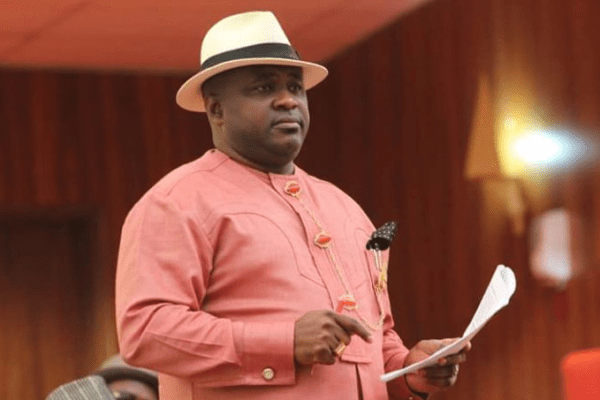

When the Supreme Court of Nigeria delivered its judgment affirming the conviction of Bassey Albert, it did more than uphold a prison sentence. It brought to a definitive close a legal battle that had traveled from the Federal High Court to the Court of Appeal and finally to the apex court. In doing so, the ruling in the case of Bassey Albert reinforced a powerful message about accountability, public trust, and the consequences of abusing public office.
The Final Chapter in the Legal Battle of Bassey Albert
The prosecution of Bassey Albert stemmed from his tenure as Commissioner for Finance in Akwa Ibom State. The Economic and Financial Crimes Commission alleged that he received bribes disguised as high value vehicles from contractors who had secured government contracts. According to the EFCC, the vehicles, valued at approximately ₦204 million, were not casual gifts or friendly gestures. They were inducements connected to official responsibilities and the awarding of public contracts. That distinction formed the foundation of the case against Bassey Albert.
In December 2022, the Federal High Court in Uyo found Bassey Albert guilty on seven counts. The trial judge imposed a sentence of seven years’ imprisonment on each count, with the terms to run concurrently. In practical terms, this meant that Bassey Albert would serve seven years rather than forty nine. The court also ordered him to refund ₦204 million to the Akwa Ibom State Government, recognizing that justice in corruption cases often requires both punishment and restitution.
As expected in a case of this magnitude, Bassey Albert exercised his constitutional right to appeal. At the Court of Appeal, the conviction was upheld, affirming that the evidence supported the findings of the trial court. However, the appellate court introduced an option of fine in place of imprisonment and did not enforce the restitution order. For many observers, this alteration appeared to soften the impact of the judgment against Bassey Albert, raising concerns about consistency in sentencing and the seriousness of anti corruption enforcement.
The EFCC expressed dissatisfaction with that outcome. From the commission’s perspective, the original sentencing structure imposed on Bassey Albert was appropriate and aligned with the gravity of the offense. The absence of enforcement regarding restitution was also seen as a significant omission. Consequently, the matter proceeded to the Supreme Court, placing the final determination of the case of Bassey Albert in the hands of Nigeria’s highest judicial authority.
Also Read: Rural Development in Akwa Ibom Gains Momentum After One Year of Strategic Reforms
In a unanimous decision, the Supreme Court affirmed the conviction of Bassey Albert and restored the original sentencing framework imposed by the trial court. The option of fine introduced by the Court of Appeal was set aside. The apex court ruled that the prison term handed to Bassey Albert must stand as originally imposed. Just as importantly, the Supreme Court reinstated the ₦204 million restitution order, holding that the appellate court erred in disregarding it.
The ruling underscored a broader principle. In corruption cases, punishment is not complete without recovery. Imprisonment addresses the personal consequences of wrongdoing, but restitution speaks to the restoration of public resources. By reaffirming both, the Supreme Court signaled that accountability must be comprehensive. The case of Bassey Albert thus became more than a personal legal struggle; it became a reference point in the ongoing conversation about integrity in public service.
With the Supreme Court’s decision, the legal journey of Bassey Albert reached its final stage. Under Nigeria’s constitutional framework, the decisions of the apex court are final and binding. There is no further avenue of appeal. What began as an investigation into alleged misconduct ultimately concluded with a firm judicial pronouncement.
Beyond the individual circumstances of Bassey Albert, the case carries wider implications for Nigeria’s political landscape. Public officials wield considerable influence over state resources. When that influence is misused, the effects ripple outward. Projects may stall, public funds may be diverted, and public confidence may erode. By affirming the conviction and sentence of Bassey Albert, the Supreme Court reinforced the idea that public office is a position of trust, not personal entitlement.
The judgment also sends a signal to other office holders. Convictions for corruption can withstand scrutiny through multiple layers of appeal. The judicial process may be methodical and sometimes prolonged, but it can ultimately deliver decisive outcomes. The case of Bassey Albert illustrates that the rule of law, though tested, remains capable of asserting itself.
For supporters of Bassey Albert, the decision may represent a difficult and painful chapter. For critics, it may be viewed as validation of long held concerns. Yet beyond political alignment or personal sentiment lies a broader reality. The Supreme Court has spoken, and its voice carries finality. The conviction stands. The sentence stands. The restitution stands.
With that, one of the most closely watched corruption cases involving a serving senator has reached its conclusion. The legal battle of Bassey Albert now moves from the active docket of the courts into the record of judicial history, leaving behind a judgment that underscores the enduring importance of accountability under the rule of law.