


Edet Ikotidem
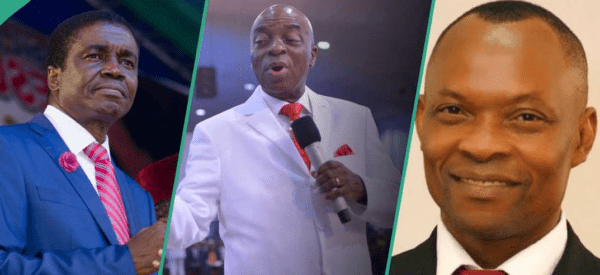
The retirement of Pastor David Abioye and Pastor Aremu from Winners Chapel, also known as the Living Faith Church Worldwide, has caused a significant stir within the Nigerian Christian community.
Winners Chapel, founded by Bishop David Oyedepo, is a prominent Pentecostal mega church that has grown into one of the largest Christian denominations in Nigeria and globally.
David Abioye, Aremu’s Retirement from Winners Chapel
The recent changes in the leadership structure, particularly the retirements of these two senior pastors, have left many church members and observers questioning whether the decision was driven by a “church mandate” or a “God’s mandate.” This tension between organizational structure and perceived divine instruction has raised concerns among both followers and the wider public.
Winners Chapel was founded in 1981 by Bishop David Oyedepo, who remains the General Overseer and presiding bishop.
The church has grown into a global institution with millions of followers, spreading its branches across continents. Winners Chapel’s theological emphasis is on prosperity, divine health, and living a victorious Christian life.
The church’s leadership structure, modeled after many Pentecostal mega churches, includes senior pastors, area overseers, and regional leaders who play vital roles in managing the global network of churches.
Pastor David Abioye, the church’s Vice President, has been a key figure in Winners Chapel’s growth. He has served as one of the most prominent leaders in the ministry, known for his charisma, teachings, and administrative leadership.
Pastor Aremu, another notable leader within the church, has also contributed immensely to the church’s expansion and spiritual development. Both men have been long-standing members of Oyedepo’s inner circle, making their retirement a matter of public interest and concern.
The primary controversy surrounding the retirements of Abioye and Aremu stems from questions about whether their departure was divinely ordained (God’s mandate) or a result of church administrative restructuring (church mandate).
In Pentecostal and charismatic Christianity, leadership decisions are often framed as following divine instruction. Many congregants believe that key decisions, especially concerning leadership changes, should be led by God’s will rather than human administrative protocols.
God’s Mandate: Those who support the notion that their retirements were driven by God’s mandate argue that spiritual leadership must evolve according to divine guidance. In their view, leaders in the church are called and appointed by God, and their tenure is likewise dictated by God’s will.
This perspective posits that Abioye and Aremu’s retirement could be part of a broader divine plan, possibly for their personal growth or for the church’s next phase.
In the Bible, leadership transitions are often presented as divinely orchestrated events.
For example, the leadership of Moses transitioned to Joshua under God’s direction -Deuteronomy 31:7-8 7 Then Moses called Joshua and said to him in the sight of all Israel, “Be strong and of good courage, for you must go with this people to the land which the Lord has sworn to their fathers to give them, and you shall cause them to inherit it.
8 And the Lord, He is the one who goes before you. He will be with you, He will not leave you nor forsake you; do not fear nor be dismayed.” and the New Testament features several instances where apostles like Paul handed over leadership to others, as seen in his relationship with Timothy-1 Timothy 4:14 14 Neglect not the gift that is in thee, which was given thee by prophecy, with the laying on of the hands of the presbytery”
Supporters of this view believe that such transitions must align with God’s timing and purpose, suggesting that Abioye and Aremu’s retirement could have spiritual significance beyond the apparent institutional decision.
Church Mandate: On the other hand, those who perceive the retirements as part of a church mandate suggest that the decision may be linked to organizational restructuring or a strategic move to allow for new leadership within the ministry.
As Winners Chapel continues to expand globally, there could be administrative reasons for bringing in younger or different leaders to adapt to the church’s evolving needs.
While churches often operate on spiritual principles, they also function as institutions with logistical and operational concerns.
The retirement of senior pastors may reflect efforts to modernize the church’s leadership, enhance governance structures, or respond to the needs of a growing congregation. Similar transitions have been seen in other large churches, such as the Redeemed Christian Church of God (RCCG), where leadership roles have evolved to meet the demands of their expanding network of churches worldwide.
The public outcry following the announcement of these retirements has been intense, with many loyal followers expressing their shock and dissatisfaction on social media and other platforms.
Some congregants feel that the church leadership has not been transparent enough in explaining the reasons for the retirements, leading to speculation and rumors about the internal workings of the church.
One of the key concerns voiced by critics is the timing of the retirements, as both Abioye and Aremu were seen as central to the continued spiritual development of the church. Some members are asking whether this decision weakens the church’s leadership at a time when stability is needed, especially with the rising competition from other Pentecostal ministries in Nigeria.
There have also been suggestions that generational change may be a factor in these retirements. Winners Chapel, like many large institutions, may be looking to bring in younger leaders who can relate more closely to the younger generation of worshippers.
However, the absence of clear communication from the church leadership has left many speculating about whether this decision is indeed part of God’s plan or a purely organizational shift.
As the founder and presiding bishop of Winners Chapel, Bishop David Oyedepo’s role in these leadership changes has been a focal point of discussions. Oyedepo is widely regarded as the spiritual father of the ministry, and his influence in determining the direction of the church is unquestionable.
Given his strong influence over the church’s spiritual and administrative matters, some believe that Oyedepo must have been involved in the decision to retire Abioye and Aremu.
Oyedepo’s leadership style has always been visionary, and his teachings emphasize obedience to divine instruction. His ability to guide the church through periods of growth and change has been a hallmark of his leadership.
However, the fact that such senior figures are stepping down has left many wondering whether this signals a shift in Oyedepo’s long-term vision for the church.
There is also speculation about Oyedepo’s potential succession plan. With his advancing age, some wonder if these retirements are a precursor to an eventual transition of leadership, though Oyedepo himself has not made any public comments suggesting that he is stepping down anytime soon.
The departure of two influential leaders like Abioye and Aremu will undoubtedly have an impact on the future of Winners Chapel. Their leadership has been critical in guiding the church through various phases of expansion, both spiritually and geographically. Their absence may create a vacuum, particularly in their areas of influence, such as regional branches they oversaw or specific ministries they managed.
From a broader perspective, the retirements could also open opportunities for new leadership to emerge within the church. Younger pastors who have been trained within the Winners Chapel system may now have the chance to step into more prominent roles, bringing fresh ideas and perspectives that could drive the church’s next phase of growth.
A;do read: 10 Reasons You Most Thank God: Importance of Gratitude
For the church’s global followers, particularly those who see Abioye and Aremu as spiritual mentors, their retirements may cause emotional disconnection or confusion.
It remains to be seen how the church will manage this transition and whether new leaders will be able to inspire the same level of loyalty and trust as these two retiring pastors.
Biblical Precedents for Leadership Transition
Throughout the Bible, there are numerous instances of leadership transition, often guided by God’s mandate. These examples offer insight into how the church might approach these current changes:
- Moses to Joshua: One of the most famous transitions in the Bible is when Moses passed the leadership of the Israelites to Joshua. This was a clear directive from God (Deuteronomy 31:7-8). Joshua was chosen not only because of his close relationship with Moses but because he was appointed by God to lead the next generation into the Promised Land.
- Elijah to Elisha: In 1 Kings 19:19-21, Elijah was instructed by God to anoint Elisha as his successor. This was a divine mandate where Elisha would continue Elijah’s prophetic ministry, demonstrating that God’s plan for leadership often involves clear instructions to ensure continuity in spiritual missions.
- Paul and Timothy: In the New Testament, Apostle Paul trained and mentored Timothy, preparing him for leadership within the early Christian church (1 Timothy 4:14). This relationship underscores the importance of mentorship and succession planning within spiritual leadership.
These examples suggest that leadership transitions, when done according to God’s mandate, are often marked by clear divine direction, mentorship, and an emphasis on continuity of vision and purpose. Whether the same is happening within Winners Chapel is the crux of the current debate among congregants.
The distinction between a “church mandate” and “God’s mandate” has become a key issue in the public discourse, as church members and observers seek clarity on the motivations behind these decisions.
While some argue that these retirements are part of an organizational restructuring aimed at modernizing the church’s leadership, others believe it could be part of a divine plan, guided by God’s will for the church and its leaders. Regardless of the underlying reasons, the transition marks a significant moment in the history of Winners Chapel, and its long-term impact will depend on how effectively the church manages the leadership change.
As new leaders step into these roles, the church will need to strike a balance between maintaining its core values and embracing innovation to continue growing in a rapidly changing religious landscape.
The ongoing public outcry demonstrates the deep emotional and spiritual connection many congregants have with their leaders, highlighting the importance of clear communication and sensitivity in times of transition.