

By Edet Ikotidem
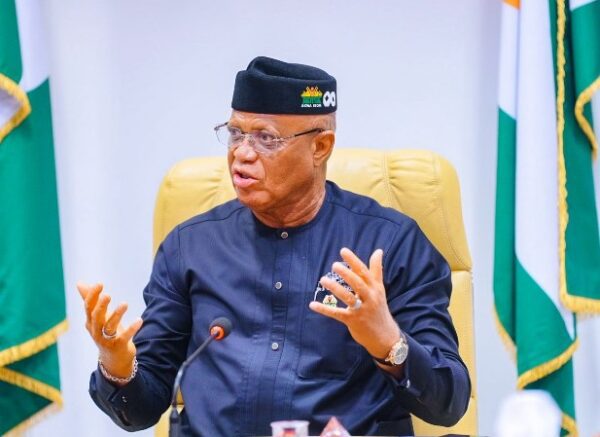
As Akwa Ibom State prepares to celebrate its 39th anniversary, the planned inauguration of 39 projects by Governor Umo Eno has generated anticipation across the state.
Umo Eno’s Planned Inauguration of 39 Projects Could Become a Defining Moment for Akwa Ibom at 39
If executed as scheduled, the initiative will not only commemorate another year in the state’s history but also send a strong message about the value of purposeful governance and measurable development.
Anniversaries are often marked with fanfare, cultural displays, and ceremonial speeches. While these celebrations have their place, citizens ultimately judge governments by the impact they make on everyday life.
Roads that reduce travel time, hospitals that improve healthcare, schools that inspire learning, and public infrastructure that supports economic growth remain the true symbols of progress.
This is why the proposed inauguration of 39 projects has attracted considerable public attention.
Inauguration of 39 Projects
The decision to align the number of projects with the state’s 39th anniversary is both symbolic and strategic. It reflects an effort to celebrate Akwa Ibom’s journey with visible evidence of development rather than mere rhetoric. In a political environment where promises often dominate public discourse, tangible projects provide a more convincing measure of performance.
Development is meaningful only when it reaches the people. Whether the projects involve transportation, healthcare, education, agriculture, tourism, rural development, or public utilities, their real value will be determined by the difference they make in the lives of ordinary Akwa Ibom citizens.
Infrastructure should never be viewed simply as concrete, steel, and buildings; it should be seen as an investment in human welfare and economic prosperity.
Governor Umo Eno has repeatedly spoken about his administration’s commitment to inclusive development and the welfare of the people. The planned inauguration of these projects presents an opportunity to reinforce that commitment. More importantly, it offers the administration an avenue to demonstrate that governance is about delivering practical solutions to public needs.
If the projects are distributed across the three senatorial districts, as many expect, they will reinforce the principle that development should not be concentrated in a few urban centres. Rural communities deserve quality infrastructure just as much as residents of the major cities.
Balanced development promotes social equity, strengthens local economies, and reduces the sense of marginalisation that sometimes exists in underserved communities.
Beyond their immediate social benefits, these projects also carry significant economic implications. Every completed road improves the movement of people and goods. Better healthcare facilities contribute to a healthier and more productive population. Improved schools create stronger educational outcomes, while investments in tourism and commerce encourage private-sector participation and job creation. Collectively, such projects can strengthen investor confidence and enhance Akwa Ibom’s reputation as one of Nigeria’s emerging economic destinations.
Also Read: Umo Eno’s Transformational Leadership: A Humane, People-Centered Path to Sustainable Dev. in Akwa Ibom
Equally important is the message these inaugurations would send about accountability. Citizens deserve to see the outcomes of public spending. Every completed project provides an opportunity for government to demonstrate that public resources are being translated into public value. In an era where transparency and accountability are increasingly demanded by the electorate, visible projects remain among the strongest indicators of responsible governance.
However, the excitement surrounding the planned inaugurations should also be accompanied by reasonable expectations. The success of any project is not determined solely by its commissioning but by its long-term functionality. Maintenance, effective management, and sustained funding will ultimately determine whether these projects continue to benefit the people years after the ribbon-cutting ceremonies.
There is also the need for citizens to view development beyond political affiliations. Good infrastructure serves everyone regardless of political party, ethnic background, or social status. Roads do not ask who voted for whom. Hospitals treat every patient. Schools educate every child. Public projects become meaningful only when they improve the collective welfare of society.
As Akwa Ibom marks 39 years of statehood, the planned inauguration of 39 projects has the potential to become one of the defining highlights of the anniversary celebrations. It represents an opportunity to celebrate progress through visible achievements rather than symbolic declarations alone.
If these projects are completed to high standards and delivered as planned, they will stand as lasting monuments to service, planning, and development. More importantly, they will serve as enduring reminders that the true celebration of a state’s anniversary lies not in the number of years it has existed, but in the quality of life it provides for its people.
The coming days will undoubtedly attract attention as Akwa Ibom celebrates another milestone. For many residents, the expectation is simple: let the anniversary be remembered not only for ceremonies and speeches, but for projects that improve lives, stimulate economic growth, and leave a lasting legacy for future generations.