

By Edet Ikotidem
For years, the people of Akwa Ibom State have harbored a vision—one rooted in economic expansion, global relevance, and seamless connectivity. Today, that vision is steadily taking form through the transformation of the Victor Attah International Airport into a true hub for international flights.
Victor Attah International Airport: The Long-Awaited Gateway to Global Connectivity
What was once a modest regional airport is now poised to become a strategic gateway linking the state—and indeed the South-South region—to the rest of the world.
Named after former governor Victor Attah, the airport represents more than infrastructure; it symbolizes foresight, ambition, and the enduring desire of a people to claim their place in the global economy. Yet for a long time, that dream seemed stalled.
Despite its modern design and world-class runway, the airport functioned largely within the confines of domestic aviation, leaving many to question when its international potential would finally be realized.
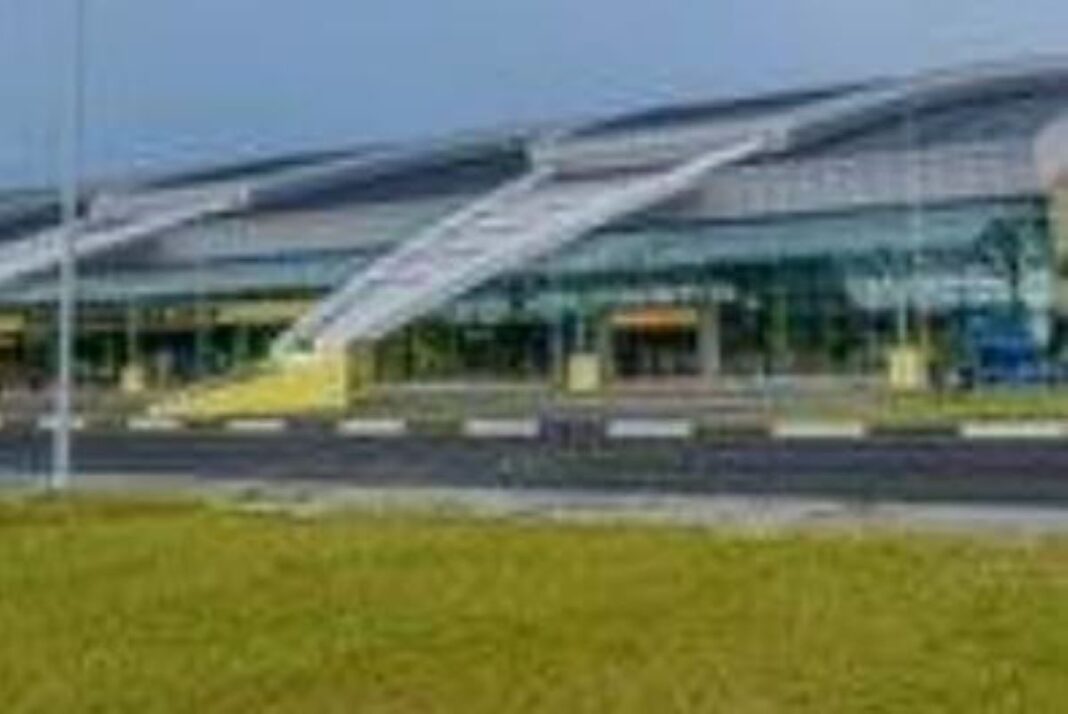
Victor Attah International Airport
Today, that narrative has changed.
The push to upgrade the airport into an international hub has been driven by a combination of political will, economic necessity, and strategic planning. Successive administrations in Akwa Ibom have recognized that no region can truly thrive in isolation. In a world increasingly defined by globalization, access is everything—access to markets, investors, tourists, and opportunities.
An international airport is not just a convenience; it is a catalyst.
One of the most compelling arguments for the airport’s expansion lies in its economic impact.
Akwa Ibom is rich in resources—oil and gas, agriculture, and human capital. Yet, without direct international connectivity, much of this potential remains underutilized. Businesses face logistical challenges, investors encounter barriers, and opportunities slip through the cracks.
With the emergence of Victor Attah International Airport as a functional international hub, these limitations begin to dissolve.
Imagine a scenario where investors can fly directly into Uyo without the need for multiple stopovers. Imagine exporters moving goods swiftly to international markets. Imagine tourists arriving effortlessly to explore the cultural richness and natural beauty of the state. These are not distant possibilities—they are the tangible benefits of a fully operational international airport.
Beyond economics, the airport also carries symbolic weight. It sends a clear message: Akwa Ibom is open for business. It reflects a state that is confident, forward-looking, and ready to compete on a global stage.
For residents, it instills pride. For the diaspora, it creates a direct link home. For the world, it signals opportunity.
However, achieving this vision has not been without challenges. Infrastructure development of this scale requires sustained investment, meticulous planning, and unwavering commitment. Upgrading facilities to meet international standards—customs, immigration, security, and passenger handling systems—is no small feat. It demands not just financial resources but also institutional capacity and professionalism.

There is also the issue of airline partnerships. An airport becomes truly international not merely by designation, but by activity. Attracting reputable international airlines requires strategic negotiations, competitive incentives, and a proven passenger base. This is where policy and marketing must align. The state must position itself as an attractive destination—not only for leisure but also for business.
Also Read: When Peace Is Mistaken for Weakness: The Silent Struggle of Akwa Ibom People
Encouragingly, progress is evident. Improvements in runway capacity, terminal upgrades, and operational systems indicate a clear direction. The conversations are no longer about “if” but “when” and “how far.” This shift in tone reflects growing confidence that the airport will soon fulfill its long-awaited promise.
Another critical dimension is regional integration. Victor Attah International Airport has the potential to serve not just Akwa Ibom but neighboring states and even parts of the South-East and South-South regions. Its strategic location makes it an ideal alternative to more congested airports in Nigeria. With proper planning, it could ease travel burdens, redistribute air traffic, and enhance regional mobility.
Yet, for all its promise, the success of the airport ultimately depends on sustainability. Infrastructure must be maintained, services must remain efficient, and standards must be upheld consistently. An international airport cannot afford to operate below expectations. Reliability, safety, and customer experience are non-negotiable.
There is also a need for complementary development. Roads, hotels, security, and tourism infrastructure must evolve alongside the airport. A world-class airport surrounded by underdeveloped support systems cannot achieve its full potential. Development must be holistic.
Critically, the people of Akwa Ibom have a role to play. Ownership goes beyond government initiatives. Local businesses must rise to meet new demands. Hospitality standards must improve. A culture of excellence must take root. The airport is a shared asset, and its success will reflect collective effort.
In many ways, Victor Attah International Airport stands at a defining moment. It is no longer just a project; it is a test of vision, execution, and continuity. Will it become a bustling hub that transforms the state’s economy, or will it remain a symbol of unfulfilled potential? The answer lies in sustained commitment and strategic action.
As the runway stretches toward the horizon, so too does the future of Akwa Ibom. Each incoming flight will carry more than passengers—it will carry possibilities. Each departure will represent connection, growth, and progress.
The long wait may not be entirely over, but the destination is now clearly in sight. Victor Attah International Airport is not just opening doors; it is opening a new chapter—one where Akwa Ibom takes its rightful place in the global conversation