
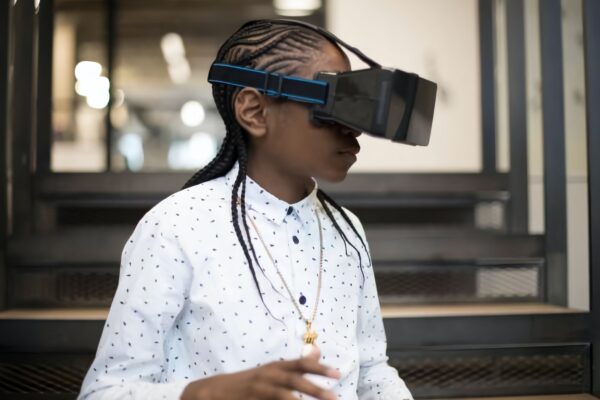

Virtual reality (VR) research has been conducted by internet tycoon Mark Zuckerberg for some time. A shared digital realm called the “Metaverse,” where individuals may communicate and engage with one another in ways that have never been imaginable, has recently been unveiled by Mark Zuckerberg as his next project.
There are still a lot of questions, despite the fact that this has been praised by many as an exciting development. What does privacy mean in this context? How will it affect our daily lives? This article examines some of the criticism and rumor around Mark Zuckerberg’s Metaverse project and considers the possible social repercussions it might have.
What is the Metaverse?
The term “metaverse” was coined by science fiction author Neal Stephenson in his 1992 novel Snow Crash. It alludes to a future iteration of the Internet that will allow for three-dimensional virtual world interaction between users. The contemporary Internet, where users can already contact and engage with one another online, is frequently considered as a natural extension of the metaverse.
The metaverse in Snow Crash is a location where people can connect with one another in a three-dimensional virtual reality. Avatars, 3D environments, and other user-generated material are all components of this virtual world. Many businesses and organizations are based in the metaverse, and they make use of it as a platform to connect with potential clients or employees.
Since its origin, the term “metaverse” has been referred to in a variety of contexts. Others use it more precisely to allude to a future version of the Internet where users can interact with each other in a three-dimensional virtual world. Some people use it to refer to the entire virtual reality industry. Whatever the definition, the idea of the metaverse continues to play a significant role in science fiction and popular culture and has caught the attention of many.
What are Mark Zuckerberg’s Plans For the Metaverse?
In Mark Zuckerberg’s vision for the Metaverse, a persistent, 3D virtual environment where users can naturally engage with other users and virtual items would be created. In the future, he sees us being able to teleport into virtual worlds and explore them with our pals. He is making significant investments in the study and creation of cutting-edge technologies like augmented reality, artificial intelligence, and quantum computing in order to make this happen.
What are Some Potential Applications of the Metaverse?
There are a variety of potential applications for the Metaverse. Several potential uses include:
● Virtual reality shopping: Picture being able to test out things before purchasing them from the convenience of your home.
● Travel the world virtually without ever leaving your couch.
● Online education: Attend classes and pick up new abilities in a totally immersive setting.
● Interactive entertainment: Play video games, watch TV shows, and enjoy your favorite movies like never before.
What Are Some Concerns About the Metaverse?
Some worries about the Metaverse have to do with how it can widen the digital divide. As an illustration, those who can buy pricey virtual reality equipment and software may be at an advantage over others who cannot. Additionally, the Metaverse might emphasize individualism and self-actualization more so than society and cooperation.
Conclusion
The fascinating and ground-breaking idea behind Mark Zuckerberg’s Metaverse is to investigate the potential of virtual reality. Although it is still in its early phases, users have given it favorable feedback.
The way individuals interact with one another and their surroundings could be completely changed by this, and it could also open up new chances for businesses to produce content for many platforms. The future of Mark Zuckerberg’s Metaverse will be exciting to watch, and we look forward to reviewing any upgrades or advancements that come about along the way.