
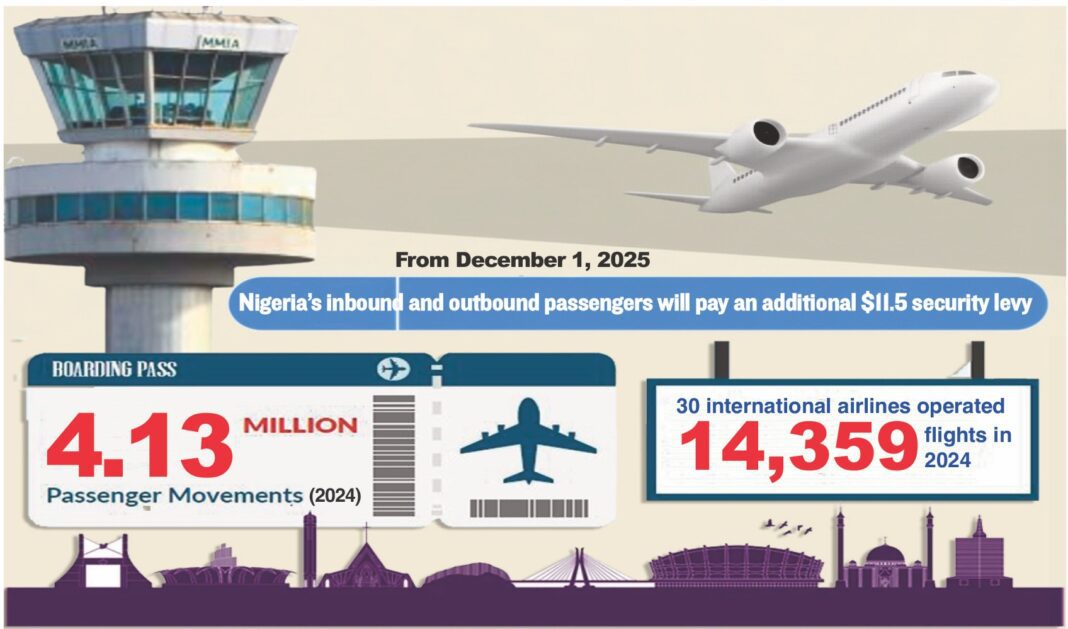

A new security levy of $11.5 has been introduced for all international travelers in Nigeria, both inbound and outbound, effective December 1, 2025. The announcement, made by the Federal Government through the Nigerian Civil Aviation Authority (NCAA), has generated widespread reactions from passengers, airline operators, and travel agencies. The security levy is part of the Advance Passenger Information System (APIS), designed to strengthen national security, improve border control, and enhance data collection on travelers entering or leaving the country.
New Security Levy Sparks Reactions Among Air Travelers
According to the directive, all airlines operating in Nigeria will be required to collect the security levy from passengers during ticket purchase or check-in. The funds will go toward upgrading digital infrastructure at airports, implementing facial recognition systems, and improving coordination between aviation authorities and immigration officers. The NCAA explained that the security levy aligns with international aviation practices adopted in Europe, the United States, and parts of Asia to counter terrorism and identity fraud.
However, the implementation of the security levy has not been received warmly by many Nigerians. Frequent flyers and travel agencies argue that it adds to the already high cost of air travel, especially as ticket prices have soared due to currency depreciation and increased fuel costs. Some passengers have expressed concern that the security levy may discourage tourism and business trips, given that Nigeria already ranks among the most expensive travel destinations in Africa in terms of ticket prices.
Airline operators have also voiced mixed reactions. While some international carriers support the move, noting that it will improve safety protocols, others worry that the security levy could complicate ticketing systems and delay boarding processes. A senior manager with one of Nigeria’s leading airlines noted that the charge might cause confusion among travelers if not clearly communicated. He emphasized that authorities must ensure the security levy is transparently managed and dedicated strictly to security improvements, rather than becoming another source of bureaucratic revenue.
Also Read: Wole Soyinka Reacts as U.S. Revokes His Visa Permanently
Industry analysts believe the security levy could yield positive outcomes if properly implemented. With the rise of global security threats and data breaches, the system could enhance real-time monitoring of passenger movement and reduce the risks of smuggling or human trafficking. The Federal Airports Authority of Nigeria (FAAN) has already confirmed that part of the security levy will fund CCTV installations and advanced surveillance systems across major airports, including Lagos, Abuja, and Port Harcourt.
Despite these assurances, the public remains skeptical. Many travelers question whether the security levy will truly deliver tangible improvements. Past experiences with similar aviation charges, such as the Passenger Service Charge (PSC), have left passengers doubtful. They argue that while fees are often introduced with promises of reform, visible improvements in airport facilities and services remain minimal. For some, the introduction of another security levy feels like an additional burden rather than a safety measure.
Government officials have appealed for patience, stating that the security levy is a small price to pay for national safety and global compliance. The Ministry of Aviation insists that the initiative is in line with international standards set by the International Civil Aviation Organization (ICAO). They maintain that the new system will also help Nigeria share security data seamlessly with partner nations, making the country’s airspace safer and more respected globally.
As the December 1 implementation date approaches, travel agencies are advising passengers to prepare for slight fare adjustments. The NCAA has also directed all airlines to update their ticketing software to accommodate the security levy and issue transparent receipts showing the breakdown of all fees.
While the security levy may be justified on security grounds, its success depends largely on accountability. Nigerians will expect clear evidence that the funds are being used effectively to upgrade airport technology and improve passenger safety. In the coming months, all eyes will be on the aviation sector to see whether this new policy becomes a model for modernization or just another financial strain on travelers already burdened by high costs.