
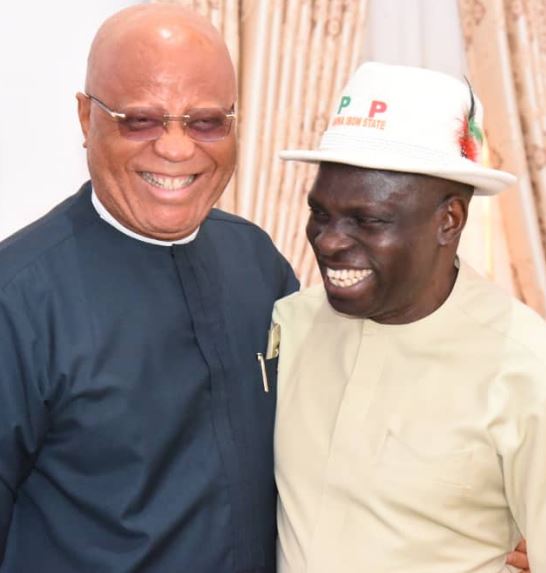

By Emmanuel Ndon
There is no doubt that primary elections in the Peoples Democratic Party (PDP) have been won and lost and the outcome may have created different emotions for her members in Akwa Ibom State.
Most often, the most visible emotion is that of bitterness, particularly from those who feel that they were unfairly treated in the process. This is most understandable and expected.
Human societies – political parties not left out – are not without these conflicts. However, in any contest, the first thing to note is that everybody cannot win at the same time. Under this circumstance, the best way forward is to shed all emotions and bring all parties together through genuine reconciliation and dialogue.
As Alan Paton puts it, reconciliation “is not ‘forgive and forget as if nothing wrong had ever happened, but ‘forgive and go forward, building on the mistakes of the past and the energy generated by reconciliation to create a new future”. This means that fences (would) have been mended, wounds healed and broken hearts restored and everyone becomes the winner in the interest of the party.
Fair enough, the party has recognized this critical requirement and is on the verge of inaugurating a committee for that purpose. Before it gets underway, it is advisable that the party dissolves all splinter and intra-party groups formed for the projection of individual political interests, collapses every external structure, and merges everybody together to form a formidable bloc capable of facing any opposition in the forthcoming elections.
Also read: A’Ibom PDP Sets Agenda For Unity, Exist On One Camp
The PDP must take reconciliation seriously and bring everyone under one umbrella. They must spearhead a process such that winners at every level must extend a hand of fellowship long enough to reach any distance. In the same vein, aggrieved members who could not sail through should be made to embrace the olive branch in the true spirit of forgiveness. It is unrealistic to expect everyone to agree about everything, but reconciliation focuses on the relationship and the camaraderie which members have enjoyed in the service of the party.
The PDP cannot afford to forgo its grip on the leadership of the state at a critical point as now. Thus, the reconciliation will ignite a renewed spirit and sense of belonging and inspire everyone to action. At this point, everyone comes to the realization that the election is not for the candidates but a collective effort of all party members.
To this end, each and every member of the party should eschew bitterness and rancour and contribute his quota to build the much-needed cohesion ahead of the polls.
It is imperative to suggest that the envisaged reconciliation should be matched with commensurate action particularly by feuding members of the party, to withdraw all pending cases in the court.
Conflicts, irrespective of severity, can always be reconciled amicably. As it is often said, the Umbrella is big enough to accommodate everyone, so there is no need for anyone to tear it down.
“In the end”, as noted by Nelson Mandela, it must be said that “reconciliation is a spiritual process which requires more than just a legal framework. It has to happen in the hearts and minds of people”. Let’s make it happen