
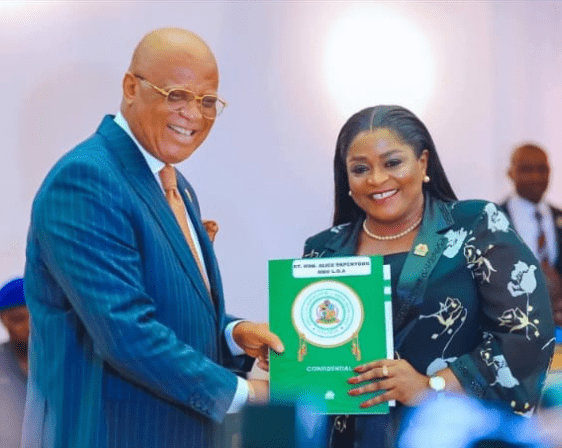

The Special Adviser to the Governor on the Bureau of Cooperative and Rural Development, Rt. Hon. Alice Ekpenyong Ekpenyong, has recorded significant milestones in her first year in office, reinforcing the state government’s commitment to grassroots economic empowerment and rural infrastructure renewal.

Within twelve months, her leadership has repositioned the Bureau as a strategic driver of rural development in Akwa Ibom, aligning cooperative growth, infrastructure renewal, and stakeholder engagement with the broader economic vision of Akwa Ibom State.
Table of Contents
ToggleStrengthening Rural Connectivity
A cornerstone of the Bureau’s interventions has been the comprehensive assessment of rural roads across the three Senatorial Districts in preparation for grading. Improved connectivity remains central to rural development in Akwa Ibom, particularly in facilitating the evacuation of farm produce, reducing post-harvest losses, and strengthening rural-urban commercial linkages.
By targeting access routes in previously hard-to-reach communities, the Bureau has laid groundwork for sustained economic participation at the grassroots level.
Revitalising Cooperative Societies
A defining highlight of the year was the successful hosting of the 2025 International Cooperative Day celebration, which convened over 5,000 cooperative societies from across the state. The event, attended by the Honourable Minister of State for Investment, reinforced the growing importance of cooperative structures in advancing rural development in Akwa Ibom.
To deepen sectoral impact, the Bureau organised strategic engagement meetings with the Oil Palm Processors and Dealers Association, focusing on productivity enhancement and sustainable value chain expansion. Similarly, a consolidation meeting with the Crayfish and Fishermen Union promoted collaboration and output growth within the fisheries sector.
These engagements reflect a targeted approach to strengthening agricultural and trade ecosystems that directly support rural development in Akwa Ibom.
Grassroots Policy Alignment
Demonstrating inclusive governance, Rt. Hon. Ekpenyong convened a high-level dialogue with cooperative representatives from all 31 Local Government Areas. The engagement created a platform for policy alignment and ensured that community-level perspectives inform implementation strategies.
Such structured consultation strengthens accountability mechanisms and reinforces institutional frameworks supporting rural development in Akwa Ibom.
Also Read: Umo Eno, Political Office Holders Under Pressure as Electoral Law Ends Delegate Politics, Embraces Direct Primaries
Institutional Strengthening and Capacity Building
Operational efficiency also received priority attention. The Special Adviser undertook a familiarisation tour of Bureau facilities, including cooperative warehouses, zonal offices, and the oil palm depot. The assessment is expected to guide rehabilitation and upgrade plans critical to sustaining rural development in Akwa Ibom.
In line with long-term sustainability goals, the Bureau organised training programs for cooperative officers and stakeholders on bookkeeping and effective management practices. By promoting transparency and accountability, these initiatives enhance the credibility and resilience of cooperative societies across the state.
Promoting Local Enterprise and Culture
Beyond infrastructure and policy, the Bureau supported cooperative participation in the 2025 Christmas Unplugged event. Societies from Ikot Ekpene, Uyo, and Eket Senatorial Districts showcased local crafts and culinary heritage, expanding market visibility for rural entrepreneurs.

Economic visibility and cultural promotion remain important pillars of rural development in Akwa Ibom, particularly in supporting small-scale enterprises and preserving indigenous industries.
A Year of Structured Progress
In just one year, the Bureau has:
-
Conducted rural road assessments across the three Senatorial Districts.
-
Hosted the 2025 International Cooperative celebration with over 5,000 participating societies.
-
Engaged key agricultural associations to strengthen value chains.
-
Convened cooperative representatives from all 31 LGAs for policy dialogue.
-
Undertaken facility assessments across Bureau infrastructure.
-
Delivered bookkeeping and management training for cooperative stakeholders.
-
Supported enterprise exposure through state-wide cultural and economic events.
While sustained impact will depend on continuity, disciplined execution, and expanded investment, the early milestones indicate a defined strategic direction. Rural development in Akwa Ibom is no longer limited to policy rhetoric; it is progressively translating into measurable grassroots empowerment.
As implementation deepens across sectors and local government areas, the durability of these reforms will shape the long-term trajectory of rural communities. For now, rural development in Akwa Ibom stands at a stage of visible momentum, with foundational systems taking shape to support inclusive economic transformation.
The next phase will determine whether this momentum evolves into generational change.