


In a dramatic escalation of U.S. military involvement in Latin America, U.S. President Donald Trump announced on January 3, 2026, that Venezuelan President Nicolás Maduro and his wife, Cilia Flores, were captured following a major military operation in Venezuela. Trump described the mission as a highly successful “large-scale strike” against key targets, culminating in the detention of Maduro and his wife and their removal from the country. Reuters
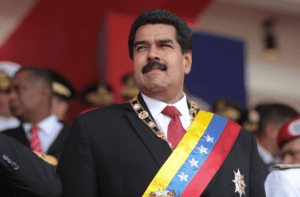
Trump Announces Capture of Venezuela’s President
According to Trump, the operation was carried out by U.S. armed forces in conjunction with U.S. law enforcement, with Maduro and his wife apprehended amid targeted airstrikes and ground actions in the Venezuelan capital, Caracas. Trump shared a photo on his social media platform showing Maduro aboard a U.S. warship, indicating the president and first lady were being flown out of Venezuela.
Trump hailed the operation as a “spectacular assault” that crippled Venezuela’s defenses and led to the successful removal of Maduro’s protection detail. He insisted that no American service members were killed during the operation, and described the mission as one of the most effective military actions in recent U.S. history.
The president also stated that the United States would “run” Venezuela temporarily, overseeing a transitional period in which U.S. authorities and energy companies would assist in stabilizing the country and restoring its vital oil infrastructure. Trump said American oil companies would invest heavily to repair Venezuela’s oil facilities and boost production, framing the move as both an economic and stabilizing effort.
In his statements, Trump cited long-standing U.S. indictments against Maduro, including charges related to narcotics trafficking and corruption dating back to a 2020 federal indictment. Attorney General Pam Bondi said Maduro and his wife would face prosecution in New York on allegations of “narcoterrorism” and other federal offenses.
Also Read:At 63: The Politics, Persona and Philanthropy of Senate President Godswill Akpabio
The strikes and capture mark a significant escalation in the U.S. campaign against the Venezuelan government, which had been under increasing pressure throughout 2025 as the Trump administration accused Maduro’s regime of fostering drug trafficking and destabilizing the region. Prior to the January 3 operation, U.S. forces had carried out airstrikes against suspected drug trafficking vessels and maintained a naval presence off the Venezuelan coast as part of a broader pressure campaign.
The reaction to the U.S. operation has been swift and mixed. Supporters of the mission celebrated the capture as a decisive blow against an authoritarian leader accused of corruption and repression, while critics condemned it as a violation of international law and national sovereignty. Some observers noted that capturing a sitting head of state through military force sets a highly controversial precedent in modern geopolitics.
Officials in Venezuela sharply condemned the strikes, calling them an unlawful act of aggression and demanding proof of life for the captured president and his wife. Venezuelan authorities also declared a national state of emergency following the U.S. strikes, with Vice President Delcy Rodríguez initially refusing to assume leadership and demanding Maduro’s return.
International responses varied, with some nations expressing alarm over the U.S. military intervention and others focusing on diplomatic concerns. Russia’s foreign ministry, for instance, strongly criticized the operation as an infringement on Venezuela’s sovereignty and called for diplomatic resolution rather than armed action.
Within the United States, political reactions were equally divided. Supporters praised Trump’s decisive leadership and framing of the operation as part of a campaign against criminal networks, while opponents questioned the legality of the strike and raised concerns about the lack of prior congressional authorization.
As of now, details about the long-term governance of Venezuela remain unclear. Trump has indicated that the U.S. will play a significant role in shaping future leadership and stability in the country while a transitional government is established. The international community continues to watch closely as events unfold, with implications for regional security, diplomatic relations, and global norms around military intervention.