
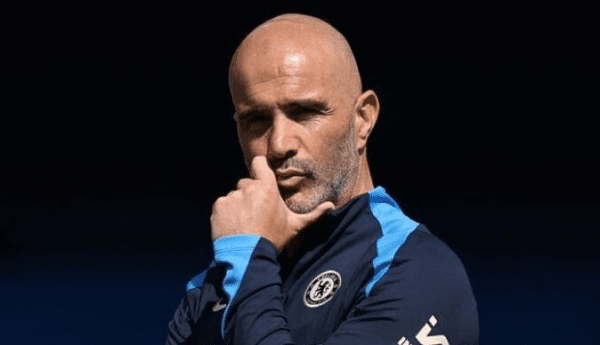

Chelsea’s managerial decisions are rarely quiet, and the growing debate around Enzo Maresca has once again placed the club under intense scrutiny. Known for bold choices and long-term gambles, Chelsea’s hierarchy now face serious questions about whether their handling of Enzo Maresca reflects patience and vision or another example of instability that has defined the club in recent seasons.

Enzo Maresca
Enzo Maresca arrived with a clear football philosophy shaped by his time working under Pep Guardiola. His ideas centered on possession-based football, structured buildup, and tactical discipline. For a club desperate to establish an identity after years of managerial turnover, Maresca looked like a calculated appointment. Chelsea fans hoped his modern approach would finally bring consistency both on and off the pitch.
However, reality at Stamford Bridge is rarely straightforward. Results under Enzo Maresca have been inconsistent, with flashes of promise followed by worrying lapses. While some performances hinted at progress, others exposed familiar Chelsea problems, including defensive fragility, lack of cohesion, and an inability to control matches against disciplined opponents. In a league as unforgiving as the Premier League, patience is often tested early.
Supporters are divided. One section believes Enzo Maresca deserves time, pointing out that Chelsea’s squad is young, heavily rotated, and still adapting to a new system. They argue that judging Maresca solely on short-term results ignores the bigger picture. Building a team around a defined style takes months, sometimes years, and Chelsea’s constant resets have historically hindered progress.
On the other side, critics argue that Chelsea cannot afford another prolonged experiment. The club’s significant financial investment demands immediate competitiveness. For them, Enzo Maresca has yet to demonstrate enough tactical flexibility or game management to justify long-term trust. Dropped points, slow in-game reactions, and questionable selections have fueled calls for decisive action.
Also Read: Nigeria’s Strong AFCON Start Sparks Hope After World Cup Heartbreak
The club’s history complicates the conversation. Chelsea are not known for managerial patience, even with successful coaches. This culture creates pressure that few managers survive. Enzo Maresca, despite his credentials, operates in an environment where results often matter more than process. That reality makes every poor run feel like a potential breaking point.
Another key factor is squad balance. Enzo Maresca inherited a team assembled across multiple managerial eras. Blending players with different strengths into a single system is never easy. Injuries and form fluctuations have further disrupted continuity. While critics blame Maresca, others see structural issues beyond his control that any coach would struggle to solve quickly.
From a strategic standpoint, sacking Enzo Maresca too soon risks repeating past mistakes. Constant managerial changes prevent long-term planning and player development. Young talents need stability to grow, and frequent tactical resets slow progress. If Chelsea truly believe in a project-based rebuild, backing Maresca through difficult phases would align with that vision.
Yet football is a results-driven business. Chelsea’s ambitions extend beyond rebuilding narratives. Champions League qualification, domestic trophies, and global prestige demand consistent performances. If Enzo Maresca cannot bridge the gap between philosophy and results, the club’s leadership may feel justified in reconsidering their position, regardless of long-term ideals.
Ultimately, whether Chelsea’s decision on Enzo Maresca is justified depends on perspective. From a short-term, results-focused view, doubts are understandable. From a long-term development angle, patience could still pay off. What remains clear is that Chelsea stand at another crossroads, where choices made now will shape their future direction.
Enzo Maresca’s situation reflects a wider issue at Chelsea, balancing ambition with stability. If the club chooses patience, they must fully commit to the process. If they choose change, they risk continuing a cycle that has already cost them dearly. For now, the debate continues, and Enzo Maresca remains at the center of one of Chelsea’s most important decisions in years