
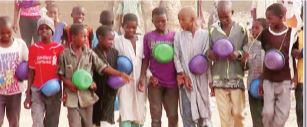

Nigeria now has around 20 million out-of-school children, according to the latest global out-of-school data from the United Nations Educational, Scientific and Cultural Organization.
It is important to note that if there is anything those who deal with the development of countries are convinced of; it is that no society can truly develop without placing children, often the youngest, at the center of all development.
This has often proven to be a sine qua non for building strong and sustainable countries.
For Nigeria, development has been a real struggle. The country’s independence came in 1960, and it didn’t come too soon, as many other African countries under the iron fist of the colonialists gained their independence around the same time.
According to statistics, India, Nigeria, and Pakistan have the highest out-of-school rates in the world. In 2019, Nigeria had 22.7 million children enrolled in public primary schools and 5.4 million in private schools.
Recent data shows that the gross primary school enrollment rate in Nigeria was 68.3%, with the northwestern states recording the highest figures.
In the 2018/2019 academic year, there were approximately 27,000 secondary schools in Nigeria with approximately 5.2 million students. …
Number of secondary schools in Nigeria as of 2018/2019, by property. Feature Number of schools Total 27,042
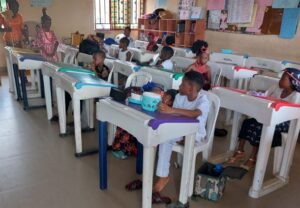
Nigeria has the largest population in Africa. With over 180 million people, it is the most populated country in the world. More than half of these people live below the poverty line and there is a high level of illiteracy among adults as well as children.
The northern region is one of the poorest parts of Nigeria; this has resulted in many children being out of school due to conflict and poverty issues which may have been caused by the Boko Haram terrorist group attacking schools during their uprising years ago…
Seven million of these children have never been to school. This means they have never been to school ever, and they are not even enrolled in school. They are not even registered for the next academic year.
This is a tragedy that needs to be addressed urgently because it’s not just about education but also about safety: many children simply don’t know how much danger there is around them when they walk out into the streets alone after dark (or during daylight hours).
10 million are in the North West and Northeast.
The North West and Northeast are two regions of Nigeria. The Northeast region is located in the north of Nigeria, bordering Cameroon, Chad, and Niger. It has a population of about 3 million people and a high concentration of refugees from neighbouring countries due to civil wars before independence.
The North West region is located on the west coast of Nigeria on land that used to belong to Benin before it became part of modern-day Nigeria (which was founded in 1960). This area also hosts many ethnic groups like Yoruba people as well as Hausa peoples who were among those who migrated here centuries ago when they were expelled from their homes by invaders such as Europeans or Arabs because they wanted better trade routes with them; however, now there are very few left thanks mainly because most young men have been sent abroad where there’s work available so instead most women have become housewives instead – which isn’t necessarily what we’d hope for our children!
Over 70% of the children in these areas are out of school.
The North West and the Northeast are the poorest regions in Nigeria. The North West has the highest number of out-of-school children followed by Borno state.
This is due to conflict and poverty
You may be surprised to know that the main reason why children are out of school in Nigeria is due to conflict and poverty.
The insurgency problem in the North has led to many children being forced out of school and into hiding. Poverty also plays a role in this situation, as it makes it difficult for parents to send their children to school, or even afford them food if they do attend classes at all.
If you look at Nigeria’s education system as a whole, you’ll see that there have been improvements made over time: more students are graduating from high school than ever before; however, these improvements haven’t been enough yet because they’re still unable to compete with other countries educational systems when it is time for job openings after graduation…
The Northern region is the poorest section of the country
The Northern region is the poorest section of Nigeria. It has the highest number of out-of-school children, followed by Borno state.
Only three states have less than 2 million out-of-school kids: Akwa Ibom, Ekiti, and Cross River.
There is no doubt that lack of education has been one major cause of poverty in Nigeria as it perpetuates itself generation after generation and leads to lower standards across all sectors including politics, economics, and business life
There is also a high level of illiteracy among adults
There are also a high level of illiteracy among adults, which is attributed to the fact that many children do not go to school. This is caused by poverty, conflict, and poor infrastructure in Nigeria’s North West and Northeast regions.
The North West has the highest number of out-of-school kids followed by Borno state
As you can see, the North West has the highest number of out-of-school kids followed by Borno state. Other states in this region include Adamawa and Yobe.
The northeast is a large region that includes many different ethnic groups and languages. It also has many areas that are underdeveloped or war-torn due to conflict with neighboring countries like Chad or Niger Republic. This makes it difficult for young people to access education there because it’s hard for them to travel outside their hometown/village without being noticed by militants who may be looking for recruits from these areas (especially if they’re Christian).
The northeast alone accounts for almost half (47%) of all Nigerian children who are not enrolled in school; however, this figure could be higher since some schools may have been closed down during the Boko Haram attacks which means they were unable to provide any sort of education services during those times.”
Over 50% of kids in Jigawa are out of school
Jigawa is the poorest state in Nigeria, with over 50% of kids out of school. This is one of the reasons why there are so many children in Nigeria who cannot read or write. The literacy rate for adults in this region is extremely low and only about 5% can read or write fluently!
Also read: Poor Quality Of Education In Nigeria, Way Forward
The high level of illiteracy among adults cannot be blamed entirely on the lack of resources; it also results from cultural practices that discourage educational opportunities for women and girls, even if they want them badly enough. For example: when girls marry young (usually before age 18), their husbands may force them into domestic work instead of allowing them to continue their educations—even though this means losing their dowry! When parents send young females off to marry early instead of educating them themselves as well as providing support during marriage negotiations/settlement periods (which last several years), they’re not just eliminating any potential future income stream but also creating a burden on society itself through increased healthcare costs due to illnesses caused by lack thereof.”
Only the South West has less than 2 million out-of-school kids.
The South West region has the smallest number of out-of-school kids. It is one of the richest regions in Nigeria, with a high literacy rate among adults and a low crime rate. However, it’s also one of Nigeria’s most peaceful regions with no recorded cases of terrorism or insurgency there since independence in 1960.
The South West has less than 2 million out-of-school children compared to other regions where over 10% are still not attending classes regularly (North Central Plateau). The North Central Plateau has about 24 million people living there but only about 2 million students attend primary schools regularly because they can’t afford books or uniforms for their children due to poverty as well as poor infrastructure like roads that don’t allow access between villages so parents have no choice but stay home instead; these factors contribute significantly towards making this region one where children spend the most time playing outdoors rather than going outside during recess period at school because it lacks proper play areas where kids could interact freely
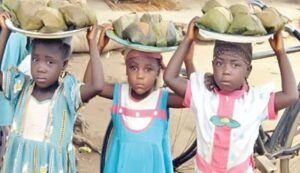
There is a need for more educational opportunities for children in Nigeria.
There is a need for more educational opportunities for children in Nigeria. Education is a fundamental right, which should be guaranteed to every child in Nigeria. It is the most important factor that can determine their future and success in life. If you think about it, what can they do without an education? The answer is nothing! They cannot work or earn money on their own; they cannot be self-sufficient if they don’t know how to read and write; and most importantly, they will not survive as adults because there are no jobs available for them once they finish school (or even after).
If we have less than 50% of our population being educated then we won’t have enough skilled labor force which means lower earnings per head caused by low productivity due mainly because there aren’t enough workers available at any given time period such as during peak seasons like holidays etcetera where demand increases dramatically but supply doesn’t increase proportionally thus causing high prices overall.”
These are the 10 countries in the world with the highest percentage of children missing from primary school:
- Liberia – 62%
- South Sudan – 59%
- Eritrea – 59%
- Afghanistan – 46%
- Sudan – 45%
- Djibouti – 43%
- Equatorial Guinea – 42%
- Niger – 38%
- Mali – 36%
- Nigeria – 34%
Conclusion
If children are not receiving an education, then their future is bleak. They will be less likely to get jobs and even more likely to be victims of crime and violence. Nigeria needs to improve its education system in order for its citizens to thrive economically as well as socially.