
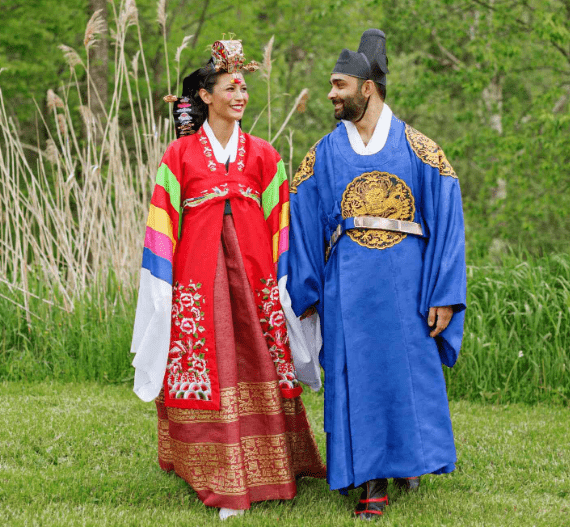

The Hanbok, a beloved emblem of grace, history, and classic beauty, is the center of Korean wedding traditional clothes.
This traditional clothing, which is woven into the fabric of Korea’s rich past, is a mark of cultural pride that captures centuries of artistic creation, symbolic meaning, and familial values.
Beautiful Korean Wedding Traditional Clothes: Cultural Significance
In Korean wedding ceremonies, the Hanbok, a cultural treasure rich in heritage, is a moving symbol of love, togetherness, and reverence for ancestors’ traditions. The Hanbok is a highly valued garment in wedding ceremonies because of its elaborate designs, vivid colors, and deep meaning. It combines modern and traditional elements to produce a tapestry with lasting beauty and cultural importance.
Origins and Cultural Significance
The Hanbok, which has its origins in the Korean dynasty, has developed throughout ages to represent the nation’s unique culture. It has deep symbolic importance and is associated with harmony, wealth, and the upholding of family customs during weddings. Deep symbolism is conveyed by the colors, materials, and designs of the clothing; red stands for joy and faithfulness, blue for harmony, and other colors for various goals the couple has for their future together.
Components and Design Elements of the Hanbok
The Hanbok is a multi-component work of art that embodies both painstaking craftsmanship and simplicity. Men often wear the jeogori and baji (pants) with their Hanbok, while ladies typically wear the chima (skirt) and jeogori (jacket). Made of opulent silk or satin, the dress is adorned with elaborate stitching, designs, and embellishments. These components are symbolic and frequently include natural themes like flowers, birds, or butterflies, all of which have positive connotations associated with love, joy, and fresh starts.
Korean Wedding Traditional Clothing
Women’s Hanbok for Wedding Ceremonies
Women wear radiant Hanbok during weddings; hues like red or blue are selected since they are symbolic of marital bliss and harmony. The wearer’s elegance is highlighted by the jeogori, which is embellished with elegant lines and beautiful embroidery. With each stride, the chima, a full-length wrap skirt, sways elegantly. Exquisite hairpieces with a plethora of exquisite decorations completed the set, and traditional hairstyles added a touch of sophistication that added to the Hanbok’s attractiveness.
Men’s Hanbok for Wedding Ceremonies
Men’s hanbok radiates class and subtle refinement. Clothing is typically identified by rich hues like blue or black combined with sophisticated patterns on the jeogori. The traditional baji, or pants, convey a feeling of respect by being elegant and simple. The Hanbok’s classic beauty is highlighted by accessories like the gat, a traditional cap, or norigae, decorative tassels, which elevate the ensemble.
Evolution and Modern Adaptations
Modern interpretations of the Hanbok have arisen, maintaining its core while incorporating contemporary aesthetics, despite its deep roots in tradition. The Hanbok has become a symbol of timeless fashion and cultural pride thanks to the admiration and incorporation of fashion designers and lovers from all over the world for its elegance into global fashion scenes.
Cultural Importance and Symbolism in Modern Times
Beyond weddings, the Hanbok continues to play a significant role in a variety of cultural events, maintaining its symbolic value in Korean culture. It represents pride in one’s country, a sense of cultural identity, and admiration for Korea’s rich history. The Hanbok is still relevant today thanks to efforts to save and celebrate it; it is a symbol of enduring customs that have been passed down through the ages.
Historical Evolution and Cultural Significance:
The development of the Hanbok reflects the historical transitions in Korea, spanning from the Three Kingdoms era through the Joseon dynasty and into the present day. Its continuing use in wedding ceremonies represents continuity and connects the past and present. This clothing, which has its roots in Confucian principles, exudes harmony, reverence for customs, and a strong sense of family values. Its preservation demonstrates a deep dedication to safeguarding Korea’s rich cultural legacy.
Adaptation of Hanbok in Contemporary Weddings:
The Hanbok retains its charm at contemporary Korean weddings while also catering to contemporary tastes. Some couples choose Hanbok fusion designs, which combine traditional and modern components to create one-of-a-kind, customized outfits. Couples can inject their identities into the outfit while maintaining its traditional character, for instance, by changing the color scheme or adding contemporary accessories.
- Hanbok’s Role in Cultural Identity and Global Recognition:
In addition to its ceremonial role, the Hanbok represents Korean identity and national pride. It is essential to the global representation of Korea’s cultural heritage and is becoming well-known in the fashion business. Fashionistas, stylists, and fans of other cultures value the Hanbok’s classic style, which helps to establish it as a singular article of clothing that is appreciated by people from all walks of life.
Cultural Importance and Symbolism in Contemporary Weddings:
The Hanbok continues to have great significance in contemporary Korean weddings. Hanbok rituals are a common way for couples to honor tradition and emphasize the value of family and ancestry. The Hanbok’s presence emphasizes the lasting reverence for legacy and the continuity of cultural rituals between generations, even though other features of weddings have changed.
Cultural Preservation and Appreciation:
The Hanbok’s promotion and preservation efforts demonstrate a dedication to cultural appreciation and preservation. Through exhibitions, seminars, and educational activities, institutions, museums, and cultural groups draw attention to the significance of the Hanbok. This commitment ensures that viewers across the world and Koreans alike have a better understanding for the Hanbok, guaranteeing its legacy for years to come.
Also read: Unveiling the Secret Story Behind Black and Grey American Traditional Tattoo
FAQs
What is the traditional Korean wedding dress called?
We refer to the traditional Korean bridal gown as the “Hanbok.” This clothing has been used for generations and is distinguished by its beautiful and exquisite style. Both the bride and the husband wear Hanbok at weddings, and they each have unique designs and hues.
What is the traditional dress of Korean girls?
The Hanbok is also a traditional dress worn by Korean females. Girls’ hanbok often consists of a jeogori (jacket) worn with either a chima (skirt) or pants. It has elaborate decorations and vivid colors, much like an adult Hanbok, which reflects Korean cultural history.
Do Koreans kiss on their wedding?
Kissing and other public demonstrations of affection are not generally part of Korean wedding rituals. Modern couples may, however, have other traditions and behaviors. For example, some may kiss during or after the ceremony, especially at more Westernized weddings or during happy hours at the reception.
Can I wear black to a Korean wedding?
Black is not a color that is typically worn at weddings since it is traditionally connected to mourning in Korean culture, where it may be viewed as unsuitable or unlucky. If the invitation says otherwise or the couple has specified a dress code, it’s best to avoid wearing black to a Korean wedding and instead choose more colorful and joyful hues.
It is considerate to adhere to traditional dress rules and demonstrate respect for the cultural significance of the occasion by dressing appropriately, such as with exquisite and bright ensembles that go well with the joyous mood.
Conclusion
The Hanbok is a living example of the beautiful beauty of tradition and the depth of Korean culture. It is a representation of love, harmony, and adherence to cultural traditions during weddings. Let us appreciate and revere this extraordinary garment as we celebrate the elegance and cultural significance of the Hanbok, acknowledging its long history and the richness of tradition it symbolizes in Korean heritage.