


Former President Goodluck Jonathan has been warned against returning to politics ahead of Nigeria’s 2027 presidential election. Senator Adams Oshiomhole issued this warning, stating that calls for Jonathan to challenge President Bola Ahmed Tinubu are traps set by political enemies. In an interview on Channels Television’s Sunday Politics, Oshiomhole argued that running again would only damage Jonathan’s well-earned reputation.
Oshiomhole to Goodluck Jonathan
Oshiomhole pointed out that Goodluck Jonathan has kept a high level of dignity since leaving office in 2015, gaining respect both in Nigeria and abroad. He said that Jonathan’s influence after his presidency, especially in peace-building and diplomacy across Africa, is a legacy worth protecting. “Jonathan has shown that one can remain relevant even outside power,” Oshiomhole remarked. “He doesn’t need to return to politics to prove anything.”
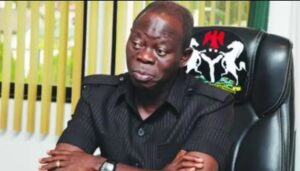
The senator further claimed that only those who secretly want Jonathan to fail are encouraging him to run again. He emphasized that Jonathan’s time in office, along with his calm acceptance of defeat in 2015, has already secured his place in Nigerian political history. Oshiomhole warned that re-entering the race could tarnish his image as a statesman. “When you have achieved peace and respect, you should not let desperate politicians push you into a fight that serves their selfish interest,” he added.
Oshiomhole also questioned the strength of Jonathan’s political base in the South South region, stating that the dominance the Peoples Democratic Party once enjoyed has faded. “The South South is no longer a guaranteed PDP territory,” he said. “If Jonathan contests now, the APC will beat him soundly.” He cited the ruling party’s expanding presence in Rivers, Cross River, and Akwa Ibom states as proof of this political shift.
Also Read: Borno Governor Zulum Decries Renewed Boko Haram Attacks After Military Ignored Security Warning
For Oshiomhole, the issue is about legacy, not ambition. He stressed that Goodluck Jonathan should focus on mentorship and statesmanship instead of joining another tough campaign. “Posterity already judges him well,” he noted. “He voluntarily conceded power, something rare in our political landscape. Why risk that honor for another election that could be divisive?”
Political analysts have weighed in, suggesting that Oshiomhole’s comments show both strategy and sincerity. Some believe that Jonathan’s return might split opposition votes, while others think it would evoke nostalgia for his more stable years in office. However, there is a general agreement that the political landscape has changed since 2015, and any comeback would need support beyond the PDP or ADC platforms.
Supporters argue that Goodluck Jonathan is still one of Nigeria’s most influential democratic leaders. They highlight his leadership style, peaceful transfer of power, and ongoing diplomatic work as reasons he continues to attract public affection. “If he runs, millions will still see him as a symbol of humility and democracy,” one supporter tweeted. Critics, however, maintain that the former leader’s age and the rise of younger candidates make a comeback unlikely.

Oshiomhole’s statement has sparked a national debate about generational change in Nigerian politics. While some younger politicians view Jonathan’s possible candidacy as a step back, others feel his presence could stabilize the often-chaotic opposition front. Even his supporters recognize that time may not be on his side. His choice, when made, will influence the nature of the 2027 elections.
The conversation also raises the broader question of the role of elder statesmen in African democracies. Should they step aside entirely or guide from the background? For Goodluck Jonathan, the answer may lie in maintaining the credibility that has won him global respect. Many observers believe his leadership in the West African Elders Forum and ECOWAS peace missions shows that he can still impact governance without running for office.
As the 2027 election nears, the former president must make a crucial decision between ambition and legacy. Whether he listens to Oshiomhole’s caution or those encouraging him to run, one fact remains clear: his influence in Nigeria’s political history is undeniable. For now, the former president is a respected figure, and his next move could either enhance his legacy or change it forever.