
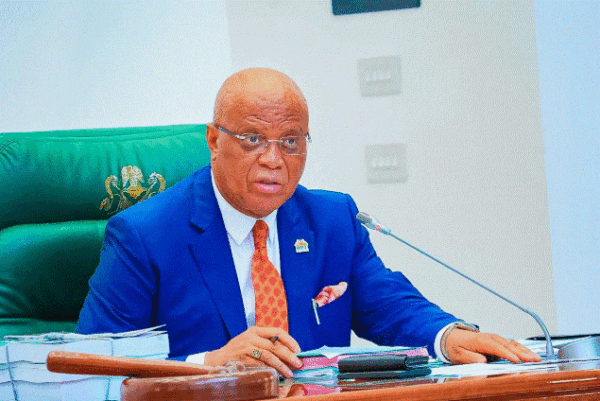

Politics in Nigeria has long been shaped by influence, negotiation, and carefully managed power structures. For decades, the biggest political battles happened behind closed doors where a few delegates shaped the destiny of millions. Today, that reality is changing fast, and leaders across the country, including Umo Eno, are feeling the pressure.
Umo Eno, Political Office Holders Under Pressure
For years, indirect primaries offered comfort and predictability for political elites. Delegates were familiar faces who could be mobilised and persuaded. Now the rules are shifting, and for Umo Eno, the reform signals a new era where influence alone may no longer secure political success.
Direct primaries are transforming how power is negotiated within political parties. Instead of a few hundred delegates, millions of party members may participate in candidate selection. Observers say Umo Eno must now prepare for a system that rewards grassroots popularity rather than elite consensus.
In Akwa Ibom State, the stakes feel even higher. Political loyalty has often followed established structures, but Umo Eno now faces a political environment where aspirants can bypass power brokers and appeal directly to party members for support.
Nigeria’s major parties are already feeling the strain. The All Progressives Congress and the Peoples Democratic Party must rethink how primaries are organised nationwide. This shift adds fresh pressure on Umo Eno, who must navigate both party logistics and grassroots expectations.
At the national level, reform supporters say the change strengthens democracy. Bola Tinubu has often emphasised internal party democracy, while Godswill Akpabio argues the reform will deepen participation. Their positions increase the spotlight on how leaders like Umo Eno adapt.


Grassroots members are watching closely. Many party supporters feel they were once mobilised only during elections and ignored afterward. This renewed excitement means Umo Eno cannot rely solely on established political networks to maintain influence.
Also Read: SSDC and REA Sign Major Partnership to Expand Electricity Access in South South Nigeria
Looking toward 2027, the political calendar is tightening. Governors are planning succession strategies while legislators consider re election ambitions. In this environment, Umo Eno and other incumbents must build stronger relationships with party members across wards and local communities.
Supporters argue this reform could benefit leaders who genuinely connect with the people. If Umo Eno successfully strengthens grassroots engagement, he may gain stronger political legitimacy and broader support within party structures.
Critics remain cautious and warn that corruption could evolve rather than disappear. Instead of delegate inducement, mass scale vote buying could emerge. This possibility means Umo Eno still faces a complex and uncertain political terrain.
If reforms succeed, Umo Eno may emerge as a leader who adapts to a people driven system. Such a transition would reflect a broader shift in Nigerian politics toward accountability and participation.
Failure, however, could leave Umo Eno exposed in a more competitive political environment. Without grassroots trust, elite support alone may no longer guarantee political stability.
For now, Umo Eno stands at the centre of a historic political transition. The move away from delegate politics represents one of the most significant internal reforms Nigeria has seen in years.
The coming years will likely test political adaptability more than ever before. Campaign strategies may shift from elite negotiations to constant grassroots engagement, town hall meetings, and visible development projects. Voters within party structures are becoming more aware of their growing influence, and expectations are rising alongside it. Leaders who previously focused on party insiders must now speak directly to communities, youth groups, and ward level stakeholders.
This transition also signals a cultural shift within party politics. Participation is gradually replacing secrecy, and visibility is becoming more valuable than backroom influence. While the outcome remains uncertain, the direction is clear. Political survival will increasingly depend on trust, performance, and connection with ordinary party members rather than quiet endorsements and private agreements.