
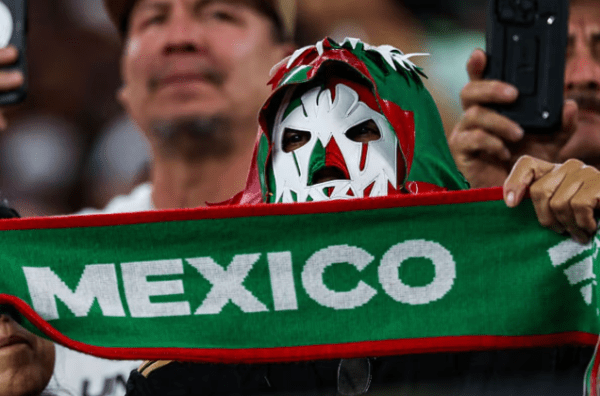

The 2026 FIFA World Cup is meant to be a celebration of unity across North America. For the first time, the tournament will be co hosted by the United States, Canada, and Mexico. Millions of fans are already making travel plans. Stadium renovations are underway. Marketing campaigns are in full swing. Yet a serious question has begun to circulate globally. Is Mexico World Cup safety becoming a legitimate concern?

Is Mexico World Cup Safety at Risk
The debate intensified after Mexican security forces killed Nemesio “El Mencho” Oseguera Cervantes, leader of the powerful Jalisco New Generation Cartel. His death was described as a major blow against organized crime. However, within hours of the announcement, violent reprisals broke out in parts of Jalisco state. Reports of road blockades, burning vehicles, and armed confrontations spread quickly. Guadalajara, one of the confirmed World Cup host cities, is located in that same state. That connection immediately triggered anxiety among international observers.
For many fans watching from abroad, headlines were alarming. Videos circulated online showing chaos on highways and smoke rising from vehicles. The phrase Mexico World Cup safety began trending in football communities and discussion forums. Some supporters started asking whether Mexico should remain one of the host nations. Others argued that removing a host country months before kickoff would be unrealistic and politically explosive.
It is important to step back and look at the broader context. Cartel violence in Mexico is a long standing and complex issue. It does not affect every region equally. The three host cities, Mexico City, Guadalajara, and Monterrey, are major economic and tourism centers. They regularly host international concerts, business summits, and sporting events. These cities already maintain significant security infrastructure and federal presence. That reality often gets lost in the wave of viral social media posts.
Mexico also has experience hosting the World Cup. The country successfully organized the tournament in 1970 and again in 1986. Both events were celebrated globally and passed without large scale security disasters. Of course, the world is different today. Information spreads instantly. Every violent incident becomes global news within minutes. That heightened visibility amplifies fear and shapes perception more aggressively than in previous decades.
The conversation around Mexico World Cup safety is therefore partly about reality and partly about perception. When a cartel leader of El Mencho’s stature is killed, short term instability can follow. Rival factions attempt to assert control. Retaliatory acts are used to signal strength. Security experts have long warned that such transitions can create temporary spikes in violence. The critical question is whether those spikes can be contained and stabilized well before the tournament begins.
Also Read: Victor Osimhen blows hot “Napoli treated me like a dog. I am angry, hurt, and deeply disappointed.”
Authorities in affected regions moved quickly after the unrest. Security patrols were increased. Certain public activities were temporarily restricted. International travel advisories were updated as a precaution rather than as an indication of systemic collapse. While the situation was serious, it was also targeted and region specific. That distinction matters when evaluating Mexico World Cup safety from a strategic perspective.
FIFA has not indicated any intention to reconsider Mexico’s hosting status. Tournament planning continues across all three countries. Security coordination for an event of this magnitude involves federal agencies, intelligence sharing between nations, advanced surveillance systems, and layered protection strategies around stadiums and fan zones. All of these measures are central to strengthening Mexico World Cup safety and reassuring international visitors. Major sporting events typically receive the highest level of protective planning available. In many cases, they become some of the most secure environments during the weeks they are held, precisely because Mexico World Cup safety becomes a top national and international priority.
Officials understand that Mexico World Cup safety is not just about stadium security but also about transportation routes, hotels, public viewing areas, and digital monitoring systems. Months before kickoff, host cities are expected to operate under heightened security frameworks designed specifically to protect fans, players, and officials. These preparations are intended to show that Mexico World Cup safety is being addressed proactively rather than reactively.
Still, critics argue that unpredictability is the core issue. They fear that criminal organizations seeking attention could view the World Cup as an opportunity to send a message. That concern cannot simply be dismissed, especially when discussions about Mexico World Cup safety are already circulating globally. High profile events naturally attract scrutiny. The responsibility now falls on Mexican authorities to demonstrate clear, visible preparedness and sustained stability in the months leading up to kickoff, ensuring that Mexico World Cup safety remains a point of confidence rather than controversy.
Supporters counter that withdrawing Mexico would set a troubling precedent. Many countries face internal security challenges. If instability in one region automatically disqualified a host nation, global tournaments would struggle to find venues. They argue that the focus should be on strengthening security rather than fueling panic.
Ultimately, Mexico World Cup safety will be judged not by headlines alone but by performance. Can authorities maintain order in key regions. Can they reassure international visitors with transparent communication and effective policing. Can they prove that the violence following El Mencho’s death was a contained reaction rather than a sign of broader unraveling.
The coming months will be decisive. If stability holds and security planning remains proactive, the narrative could shift toward resilience and preparedness. If unrest spreads or persists near host zones, pressure from fans and media will intensify. For now, the situation remains under watch, and the world is paying close attention.
The 2026 World Cup represents more than football. It symbolizes cooperation across borders and shared celebration. Mexico has the passion and experience to host successfully. The challenge now is ensuring that confidence in Mexico World Cup safety matches that ambition.