
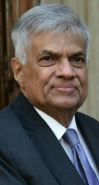

Ranil Wickremesinghe was suddenly promoted by Sri Lanka’s prime minister to become the new interim president – but how long he will remain in office is an open question.
His predecessor, Gotabaya Rajapaksa, fled to the Maldives on Tuesday after mass protests over the island’s economic crisis.
In fact, Mr. Rajapaksa has not yet issued a statement of resignation, which particularly weakens the power of the incumbent president.
Mr. Wickremesinghe, a senior opposition MP, has served as prime minister six times but has never served a full term.
His final term as prime minister only began in May, when he was appointed to the post in an ultimately unsuccessful bid by Mr. Rajapaksa to hold on to the post. Mr. Wickremesinghe’s new role as caretaker president got off to an unfavorable start when he declared a nationwide state of emergency, only to be defied by thousands of protesters who stormed his office in the capital, Colombo. In a televised statement, he called the protesters “fascists”. But they consider him too close to Mr. Rajapaksa and also want to oust him from power. His private home was burned down during the riots on Saturday. He was not at home at the time. In early April, protests flared up in Colombo. Since then, they have grown in size and spread across the country.
Also read: Huge Crowds On Streets Of Tokyo Pay Tribute To Former Japanese Prime Minister Shinzo Abe
For months, people have had to contend with daily power outages and shortages of basic necessities such as fuel, food, and medicine in Sri Lanka.
The country’s foreign exchange reserves have practically run out, which means there is not enough money available to buy goods from other countries.
Resentment over these growing difficulties has now overflowed and at least nine people have lost their lives in the turmoil that followed. Mr. Wickremesinghe is a lawyer by profession and comes from a wealthy family of politicians and businessmen.
He was first elected to parliament in 1977 and rose rapidly through the party ranks after Ranasinghe Pramadasa was elected president in 1989. He served as prime minister from 1993 to 1994.
In 1994, he became leader of the United National Party (UNP) when Gamini Dissanayake was killed by suspected Liberation Tigers of Tamil Eelam rebels.
He himself narrowly escaped assassination when a bomb exploded at a rally in Eppawala where he was speaking. Mr. Wickremesinghe improved his party’s image by establishing a disciplinary commission to get rid of corrupt party members.
He also attempted to alter his personal image with various haircuts to make himself look more attractive, and he attempted to broaden public support for the UNP by visiting villages.
In more normal times around the turn of the century, he was a bona fide presidential contender, but then his star faded.
He was prime minister during the deadly 2019 Easter Sunday bombings that killed at least 250 people.
He said he was “out of the loop” when it came to intelligence warnings ahead of the attacks.
In the last election, his once-ruling UNP managed to secure a single seat in parliament, leaving him as his sole representative in parliament – and fueling claims by his opponents that he lacks legitimacy to hold office.
One of the main reasons people are angry with Mr. Wickremesinghe was his perceived closeness to the Rajapaksa family.
Many people believe he helped protect them when they lost power in 2015.
To bolster his authority, Mr. Wickremesinghe has now ordered a new committee led by army and police chiefs to “do what is necessary” to restore order.
But the uproar is now such that it is unclear which measures will be up to the task – or whether Mr. Wickremesinghe is the man for it.