
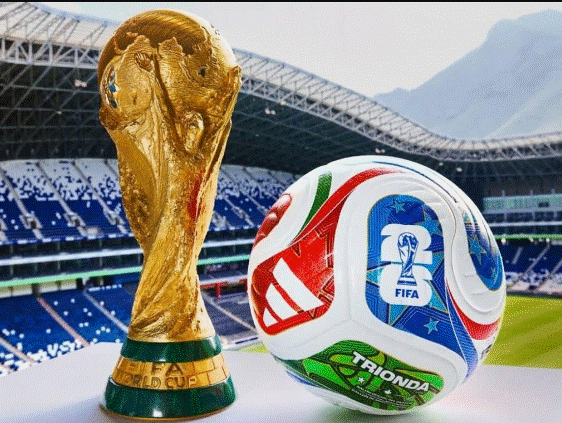

The group stage of the 2026 World Cup is already showing signs that this tournament will not follow predictable patterns. While traditional football powerhouses are still expected to progress, several underdog nations are proving they have the structure, discipline, and mentality to challenge for knockout stage qualification. With the expanded format giving more teams a real chance, surprises are becoming a central theme of this competition.
Table of Contents
ToggleMorocco Show Why Experience Matters in Tough Groups
Morocco have once again shown why they are considered one of Africa’s most disciplined teams. Their 1-1 draw against Brazil highlighted their defensive organization and ability to stay compact under pressure. They controlled key moments of the match and limited Brazil’s attacking rhythm.
With performances like this, Morocco look capable of grinding out enough points to advance. Their tactical discipline and tournament experience from recent international competitions make them one of the strongest underdog candidates for the 2026 World Cup knockout stage.
Cape Verde Prove Defensive Football Still Works
Cape Verde produced one of the most surprising results of the tournament so far by holding Spain to a 0-0 draw. Spain dominated possession, but Cape Verde’s structure, communication, and discipline kept them level throughout the match.
This result shows that even debutant teams can compete at the highest level when properly organized. If Cape Verde continue this level of defensive performance, they could realistically secure the points needed to progress from a difficult group in the 2026 World Cup.
Egypt Rely on Experience and Leadership
Egypt’s 1-1 draw against Belgium showed that they are not intimidated by elite opposition. Led by Mohamed Salah, they managed to stay composed under pressure and capitalize on key moments in the match.
Egypt’s strength lies in experience and game management. They may not dominate possession, but they are difficult to break down and dangerous on the counterattack. In tight group standings, these qualities could be enough to push them into the knockout rounds of the 2026 World Cup.
Ivory Coast Combine Structure With Efficiency
Ivory Coast started strongly with a 1-0 win over Ecuador, a result that immediately improved their chances of qualification. Their performance was built on balance, with solid defensive organization and effective attacking transitions.
What makes them dangerous is their ability to control games without overcommitting. In tournaments like the 2026 World Cup, where margins are small, this kind of efficiency often separates qualifiers from early exits.
Also Read: 2026 World Cup Shocking Results That Have Stunned Football Fans
Ghana Show They Can Compete With Physical and Tactical Strength
Ghana’s 1-0 win over Panama demonstrated resilience and discipline. They were not dominant throughout the match, but they managed the game intelligently and secured a vital three points.
Teams like Ghana often thrive in tournament settings where physical strength and tactical discipline matter as much as flair. If they maintain consistency, they could quietly secure qualification from a competitive group in the 2026 World Cup.
Why the Expanded Format Helps Underdogs
One of the biggest reasons underdogs have a real chance this year is the expanded 48-team format. More qualifying spots and additional group dynamics mean that teams do not need perfect performances to advance.
A single win and a draw can often be enough, especially in tightly contested groups. This increases the chances of surprise qualification and gives disciplined teams a realistic path to the knockout stage of the 2026 World Cup.
Defensive Discipline Is Becoming the Key Factor
Across multiple matches, a clear pattern is emerging: teams that defend well and stay organized are collecting valuable points. Clean sheets and low-scoring draws are becoming just as important as big wins.
Underdogs who prioritize structure over attacking risk are proving difficult to break down. This shift in approach is giving teams like Cape Verde, Morocco, Egypt, Ivory Coast, and Ghana a genuine chance in the 2026 World Cup.
Final Outlook
While bigger nations still control much of the tournament narrative, underdog teams are closing the gap through discipline, teamwork, and smart tactical setups. The early results suggest that qualification is no longer reserved only for traditional giants.
If these teams continue their current form, the 2026 World Cup could feature one of the most competitive and unpredictable knockout stages in recent history, with underdogs playing a major role in shaping the tournament’s story.