

Edet Ikotidem
The Ibom Deep Sea Port (IDSP) development of in Akwa Ibom State, Nigeria, has faced significant challenges despite its potential to transform the region into a major economic hub.
While the state and federal governments show outward support, deeper issues of ethnicity, personal political interests, and feelings of marginalization among local communities (the different ethnic groups in Akwa Ibom) have considerably stalled progress.
Ethnic diversity in Akwa Ibom State, like in many parts of Nigeria, often plays a dual role in fostering both community identity and division. Akwa Ibom is primarily inhabited by the Ibibio, Annang, and Oron ethnic groups, each with its historical significance and socio-political influence. The location of the Ibom Deep Sea Port in the coastal Oron region has sparked ethnic tensions, as other groups feel marginalized or underrepresented in the project’s planning and implementation stages.
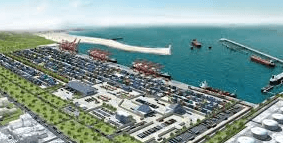
Ibom Deep Sea Port Development
The Oron people, for instance, have expressed concerns that despite the port being located in their territory, they are not adequately involved in decision-making processes.
This has led to suspicions and resistance, which, in turn, slow down project execution. The perceived lack of inclusion and benefit-sharing among the ethnic groups has fostered a climate of mistrust, making collaborative efforts difficult. Other tribes like the Ibibio see the Oro nation as minority, who should not own such a project forgetting that the site of the project was made by Nature.
The division created by the ethnicity is such that may not be resolved in generation to come. There is nothing that develops a region like a deep sea port
The political landscape in Akwa Ibom is marked by a complex interplay of interests among state and federal politicians. Various political actors have been accused of using the IDSP project to advance their personal agendas.
This politicization has led to delays, as conflicting interests result in bureaucratic bottlenecks and a lack of cohesive strategy.
Governor Udom Emmanuel, who served before Governor Umo Eno, was reported to paid lip service the project by not completing critical stages of the project. When the current Senate President, Godswill Obot Akpabio was the governor, there was an allegation that the site of the project be moved from Ibaka since there were oil pipelines littered across the length and breadth of the coastal region. Ever since then, confusion set in.
Let it be noted that no governor will have the political will to see the project come to its completion, expect God intervenes. The reason is simple. Anyone of them who comes will want to start his own new project, for instance 18-story building in Lagos, coconut and the syringe factories which are no more functional
However, changes in political leadership often bring shifts in focus and priorities, with new administrations either re-evaluating or stalling ongoing projects. These political shifts can disrupt continuity and slow the overall progress of large infrastructure projects like the IDSP.
Additionally, political rivalries within the state have led to a lack of unified support for the project. Politicians may withhold support for initiatives spearheaded by their rivals, even if these initiatives are beneficial to the state.
This internal political friction undermines the consistent push needed to drive such a significant infrastructure project to completion.
The feelings of marginalization among various communities in Akwa Ibom stem from historical neglect and unequal distribution of resources and development benefits.
The IDSP, touted as a transformative project for the region, has ironically highlighted these disparities. Communities that feel sidelined in the development plans are less likely to support the project, viewing it as another example of their continued marginalization.
The perception of marginalization is not limited to ethnic lines but also includes economic disparities.
For instance, local communities affected by the project may feel that they are not receiving adequate compensation or job opportunities, despite bearing the brunt of environmental and social impacts. This has led to protests and legal challenges, further delaying the project.
While both the state and federal governments have publicly supported the IDSP, the reality on the ground reflects a more complicated relationship.
The need for federal approvals and funding means that the project cannot progress without active and sustained federal involvement. However, instances where federal support has been perceived as lacking or delayed exacerbate local frustrations and slow down progress.
Also read: Hard Times: Nigerian Governors Keep Silence After Receiving N570b from FG
Governor Umo Eno’s recent engagements with President Bola Tinubu underscore the ongoing need for federal backing . However, the bureaucratic processes involved in securing such support often lead to delays. Moreover, federal priorities might shift due to changes in national leadership or economic conditions, affecting the level of support for state-specific projects like the IDSP.
The IDSP is envisioned as a Public-Private Partnership (PPP) project, which introduces another layer of complexity. While PPPs can bring in much-needed expertise and funding, they also require clear and stable regulatory frameworks.
In Nigeria, the regulatory environment can be unpredictable, which discourages potential investors. This regulatory uncertainty, combined with the aforementioned ethnic and political challenges, makes it difficult to attract and retain private sector partners
Infrastructure projects of the scale of the Ibom Deep Sea Port inevitably lead to significant environmental and social impacts. Concerns about these impacts have led to resistance from environmental groups and local communities. Proper environmental assessments and mitigation strategies are essential, but these processes are often seen as secondary to the push for rapid development, leading to conflicts and further delays.
To conclude, addressing these issues requires a multifaceted approach that includes inclusive planning, transparent governance, and sustained federal and state collaboration.
Ethnic groups must feel genuinely included in the project, not just as beneficiaries but as active participants in the decision-making process. Political leaders must prioritize the project over personal or party interests, ensuring continuity and stability in its execution.
Furthermore, addressing feelings of marginalization requires equitable distribution of the project’s benefits, ensuring that local communities see tangible improvements in their livelihoods.
Sustained federal support is crucial, and efforts must be made to streamline bureaucratic processes and ensure regulatory stability to attract private sector investment. Environmental and social impacts should be carefully managed to prevent resistance from local communities and environmental groups.
Ultimately, the successful development of the Ibom Deep Sea Port hinges on addressing these underlying issues comprehensively. By fostering a more inclusive and collaborative approach, the project can realize its potential to transform Akwa Ibom into a major economic hub and drive significant economic growth for the region and Nigeria as a whole.